On 16 September 2004, Pocket Monsters Emerald went on sale in Japan for the Game Boy Advance. It sold 790,527 copies in its first week. The rest of the world waited up to 400 days for it, and no core Pokémon game was ever made for a Game Boy again.
The game
Emerald is Ruby and Sapphire with both villain teams in the script, Rayquaza called down to stop Groudon and Kyogre, Wallace promoted to Champion, animated battle sprites for the first time since Crystal, and the Battle Frontier waiting after the credits. It also has a random number generator that starts from the same seed every time the game boots, which is why it became the cartridge people learned to manipulate for shinies.
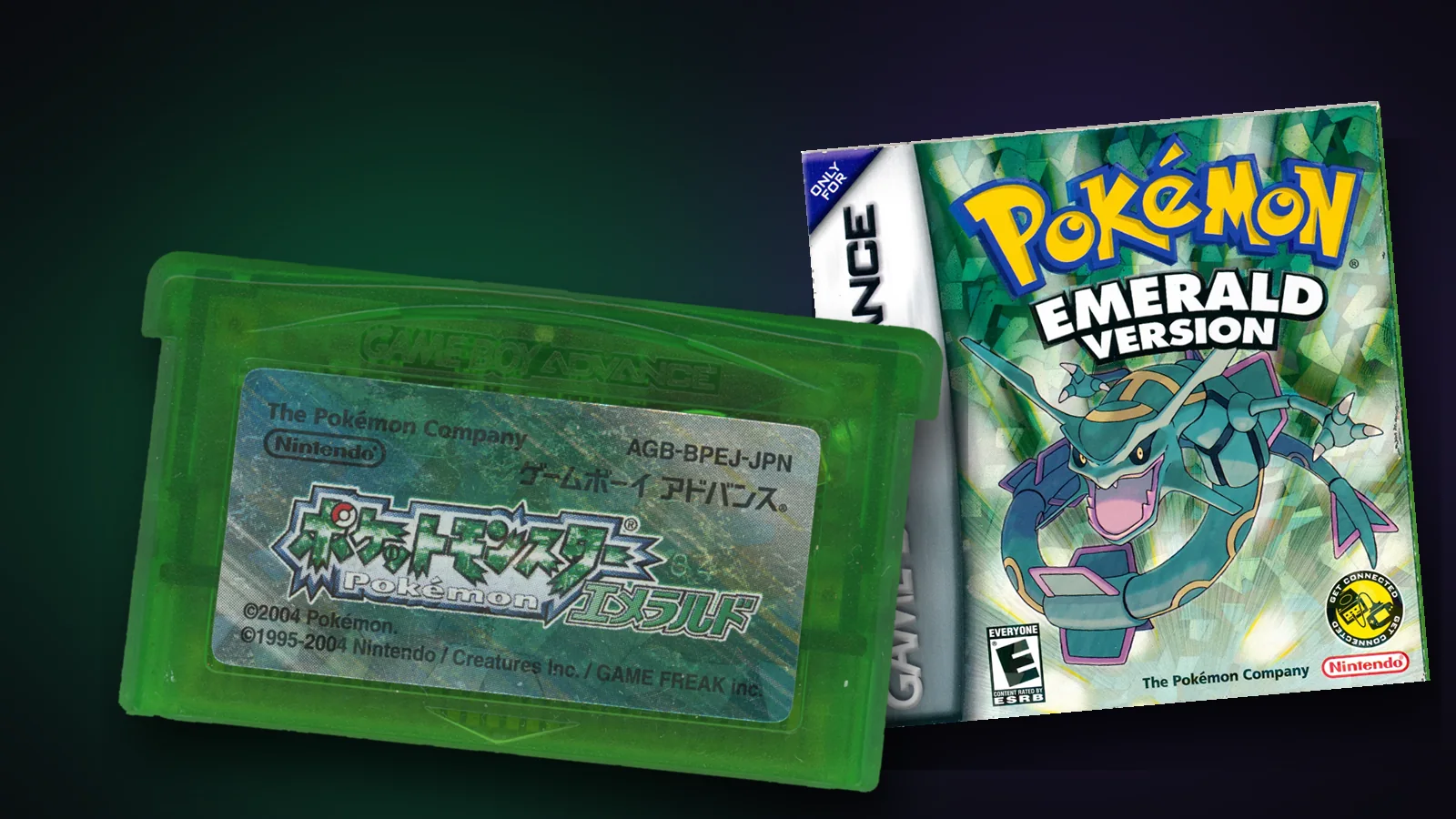
The cartridge and the box
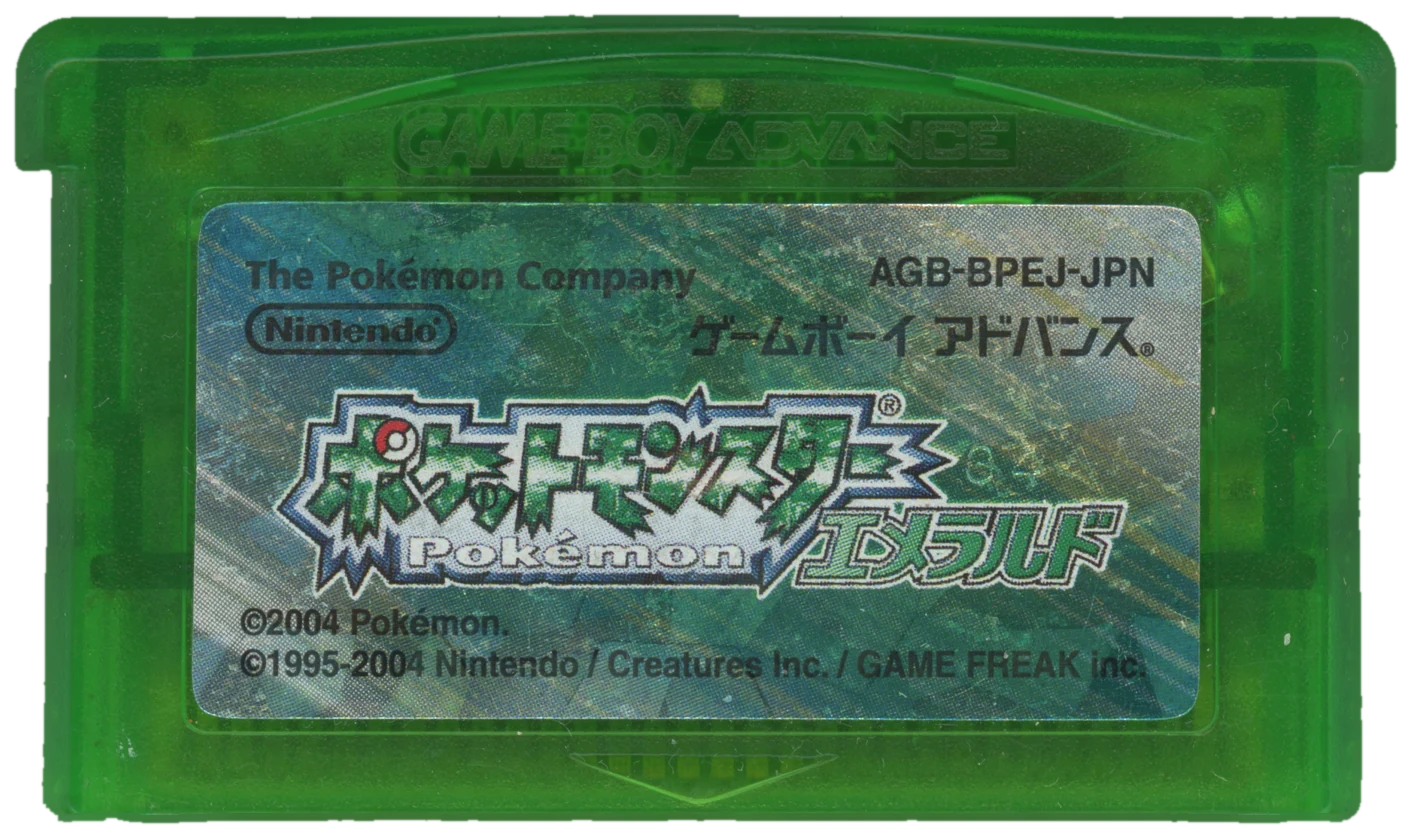
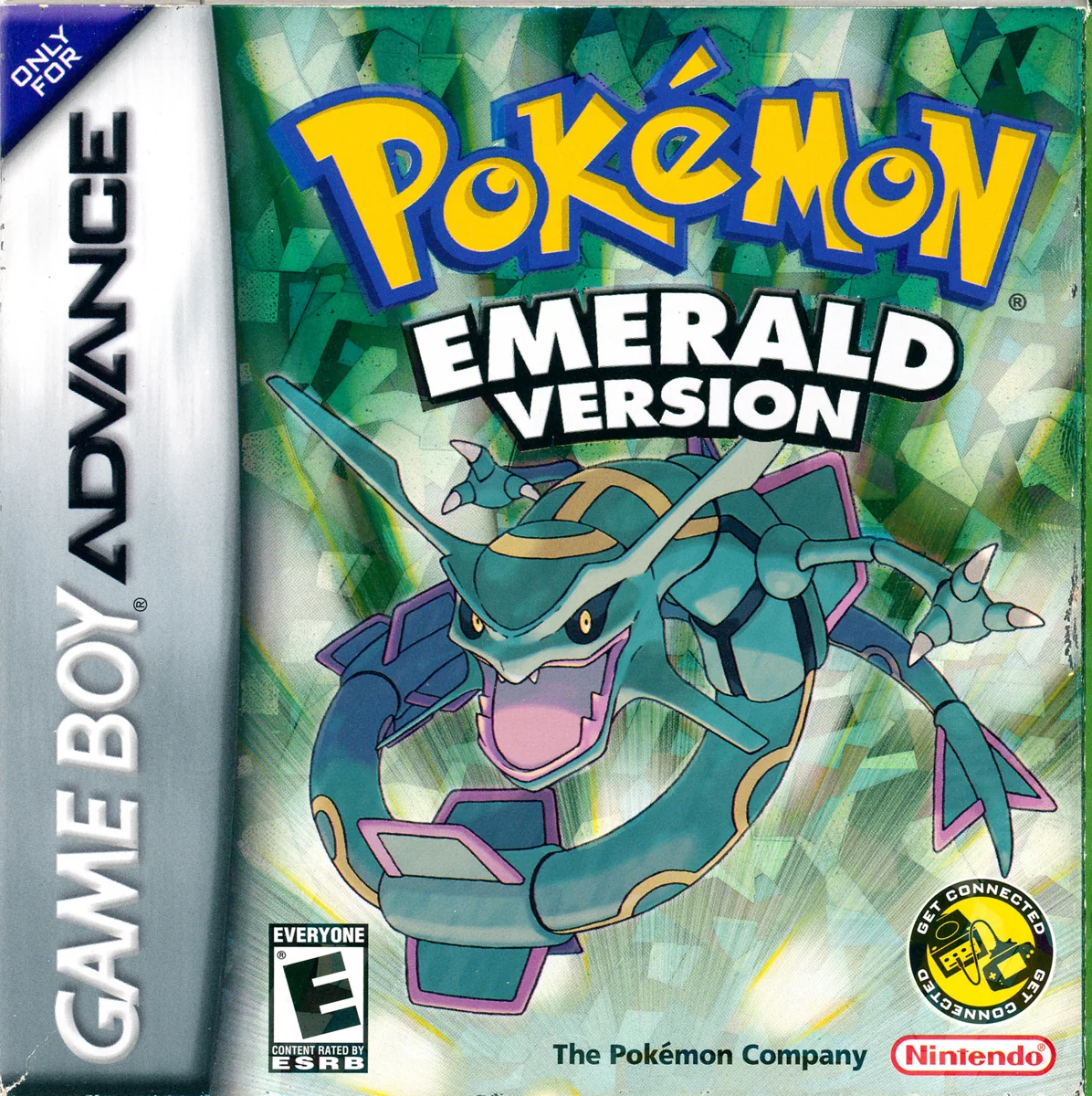
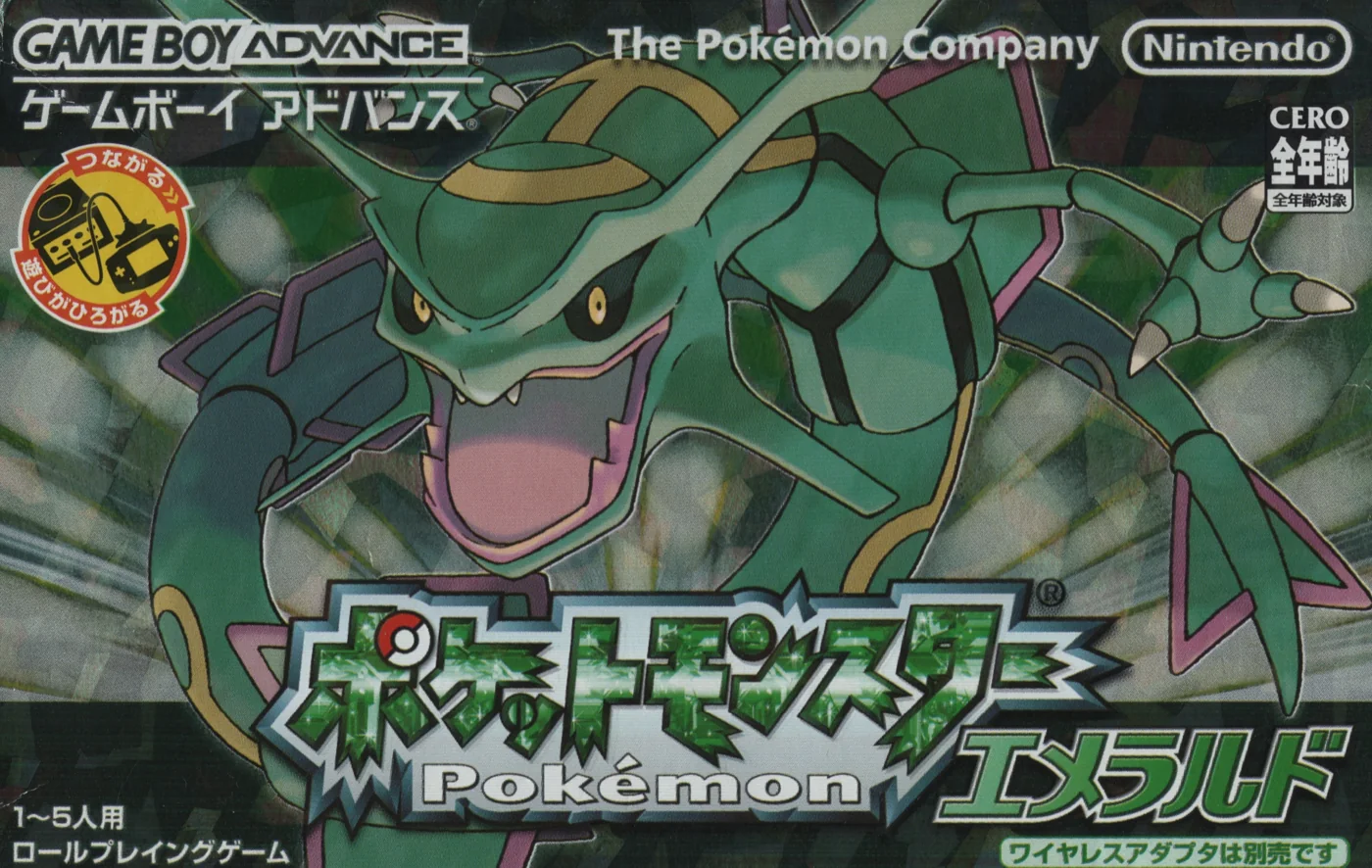
Emerald cartridges are among the most counterfeited on the Game Boy Advance. A genuine one has a translucent green shell, a crisp holographic label and a Nintendo-marked board inside, so ask for a photograph of the board, not the label, before paying today’s prices.
The Battle Frontier
Ruby and Sapphire had one Battle Tower. Emerald built an island with seven facilities, each with its own rules and a Frontier Brain holding a silver and a gold Symbol.
What it is worth today
Emerald was the lowest-selling core Pokémon game on the Game Boy Advance, at 6.32 million copies by March 2007. It has never been re-released on a later Nintendo system, and the second-hand market has noticed. PriceCharting’s listed prices on 15 September 2026, with sterling at $1 = £0.7416:
| Condition | USD | GBP |
|---|---|---|
| Loose cartridge | $222.50 | £165 |
| Complete in box | $744.31 | £552 |
| Sealed | $2,012.00 | £1,492 |
In the card game
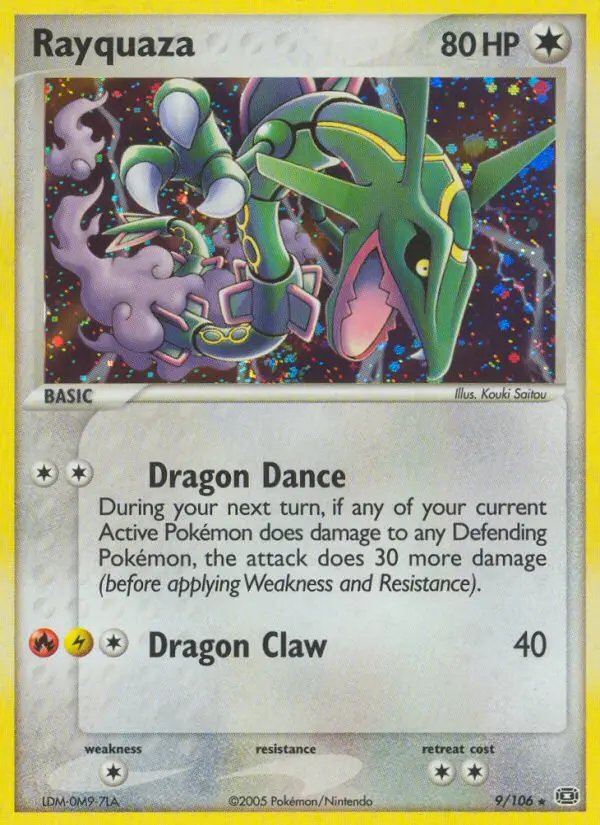
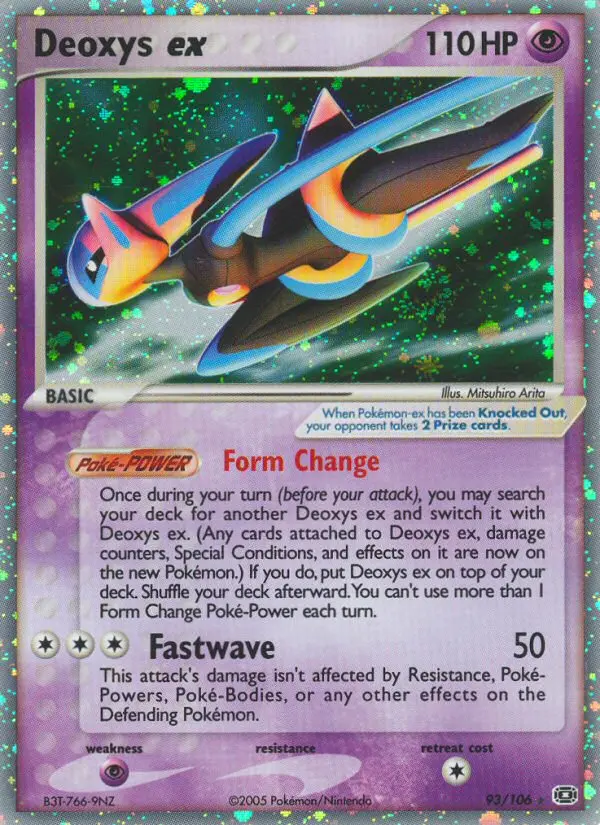
The card game marked the release with EX Emerald, an English-only set released on 9 May 2005. Its chase card is the game’s own Deoxys forme: Speed Forme Deoxys ex by Mitsuhiro Arita, around $800 today. Every card and price is on the EX Emerald set page; the game itself is on the Emerald game guide.