Pokkén Tournament: A Look Back
Bandai Namco fused Tekken’s fighting game DNA with Pokémon’s universal appeal to create one of the Wii U’s most ambitious experiments. Here’s the story of how it came together, how it played, and where it ended up.
How It Came Together
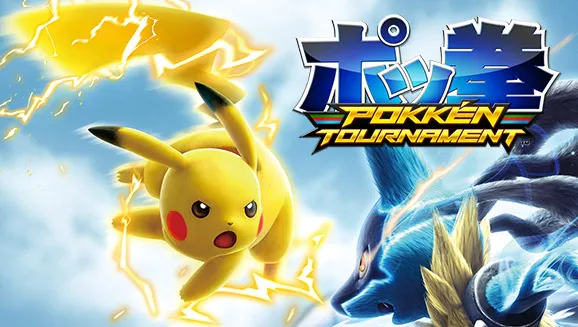
Pokkén Tournament launched on Wii U in March 2016 after a stint in Japanese arcades, developed by Bandai Namco Studios in collaboration with The Pokémon Company. The title — a portmanteau of Pokémon and Tekken — was directed by Haruki Suzaki, with Tekken producer Katsuhiro Harada and SoulCalibur producer Masaaki Hoshino overseeing the project.
The roster was shaped by an early creative tension: Pokémon Company CEO Tsunekazu Ishihara initially wanted exclusively Fighting-type Pokémon, but Hoshino pushed for variety. The result included Chandelure, Suicune, and Braixen alongside the expected brawlers — defining Pokkén as an accessible action game rather than a hardcore fighter.
The Phase Shift System
The defining innovation was the Phase Shift system. Every match cycles between two distinct modes, creating a rhythm unlike any other fighting game:
Layered on top was a colour-coded Attack Triangle and a Synergy Burst mechanic that buffed stats and triggered Mega Evolutions for eligible Pokémon. Activating a Burst Attack at the right moment could swing an entire round.
The Roster
The Wii U version shipped with 16 playable Pokémon across four battle styles, plus two unlockable Mewtwo variants earned through the single-player campaign.
| Pokémon | Style | HP | |
|---|---|---|---|
| Machamp | Power | Devastating grabs; no ranged moves | |
| Garchomp | Power | Ground movement via “Dig” | |
| Suicune | Standard | Beam-based zoning specialist | |
| Lucario | Standard | Balanced all-rounder; beginner-friendly | |
| Charizard | Power | Aerial dominance and raw damage | |
| Blaziken | Standard | Martial arts pressure | |
| Mewtwo | Standard | Moves drain own Synergy Gauge | |
| Pikachu | Standard | Fast electric projectiles | |
| Pikachu Libre | Speed | Wrestling-based close-range | |
| Sceptile | Speed | Seed traps and high mobility | |
| Gardevoir | Technique | Long-range magical projectiles | |
| Weavile | Speed | Fastest walk speed in the game | |
| Braixen | Standard | Popular in early meta | |
| Gengar | Technique | Invisibility; high skill ceiling | |
| Chandelure | Power | Pure zoner despite Power label | |
| Shadow Mewtwo | Technique | Lowest HP; highest offensive pressure |
Hardware Quirks
The Wii U rendered Pokkén at native 720p upscaled to 1080p. Single-player and online held a stable 60 fps, but local multiplayer halved to 30 fps — rendering two separate 3D viewports forced one player onto the GamePad screen.
Tournament organisers used a hidden LAN Battle Mode (L+R+Down at title screen) to link two consoles via Ethernet for full 60 fps local play. Hori also produced a wired Pro Pad replicating the arcade layout — though it only worked with Pokkén and nothing else on the console.
The Competitive Peak
Pokkén reached main-stage status at EVO 2016, where Hisaharu “Tonosama” Abe won the championship with Braixen in front of over 15,000 attendees. At the 2016 Pokémon World Championships in San Francisco, Masami Sato took the Masters Division title with Mewtwo — the first official World Championship for the sub-series.
The Wii U version eventually stagnated as the Japanese arcade build received new fighters — Croagunk, Empoleon, Scizor, and Darkrai — none of which made it to the console release. The competitive community migrated to Pokkén Tournament DX on Switch.
Commercial Performance
Pokkén Tournament was a commercial success for the Wii U. Japanese launch sales directly correlated with a Wii U hardware bump from 4,000 to 13,000 units that week.
The Switch port eventually outsold the original. Critical reception was generally positive, with review scores typically falling between 7.5 and 9 out of 10.