Pokémon Platinum:
The Definitive Sinnoh
Diamond and Pearl sold 17.67 million copies and were still widely criticised. Here’s how Game Freak answered every complaint — and built one of the DS era’s most enduring games in the process.
The Case Against Diamond and Pearl
When Pokémon Diamond and Pearl launched globally between 2006 and 2007, the franchise was selling to a massive new install base on the Nintendo DS. They introduced the permanent physical/special split, online trading via the GTS, and the fourth generation’s dense, mythology-heavy Sinnoh region. They also sold 17.67 million combined units — a commercial triumph by any measure.
And yet. The community’s verdict was cutting. The overworld surfing speed was slower than walking. Battle animations featured artificial micro-pauses between every text box. The regional Pokédex had just 151 entries, meaning the fire-type specialist in the Elite Four — Flint — was forced to use Steelix, Drifblim, and Lopunny to fill out his five-slot team. There simply were not enough Fire-types available in the wild.
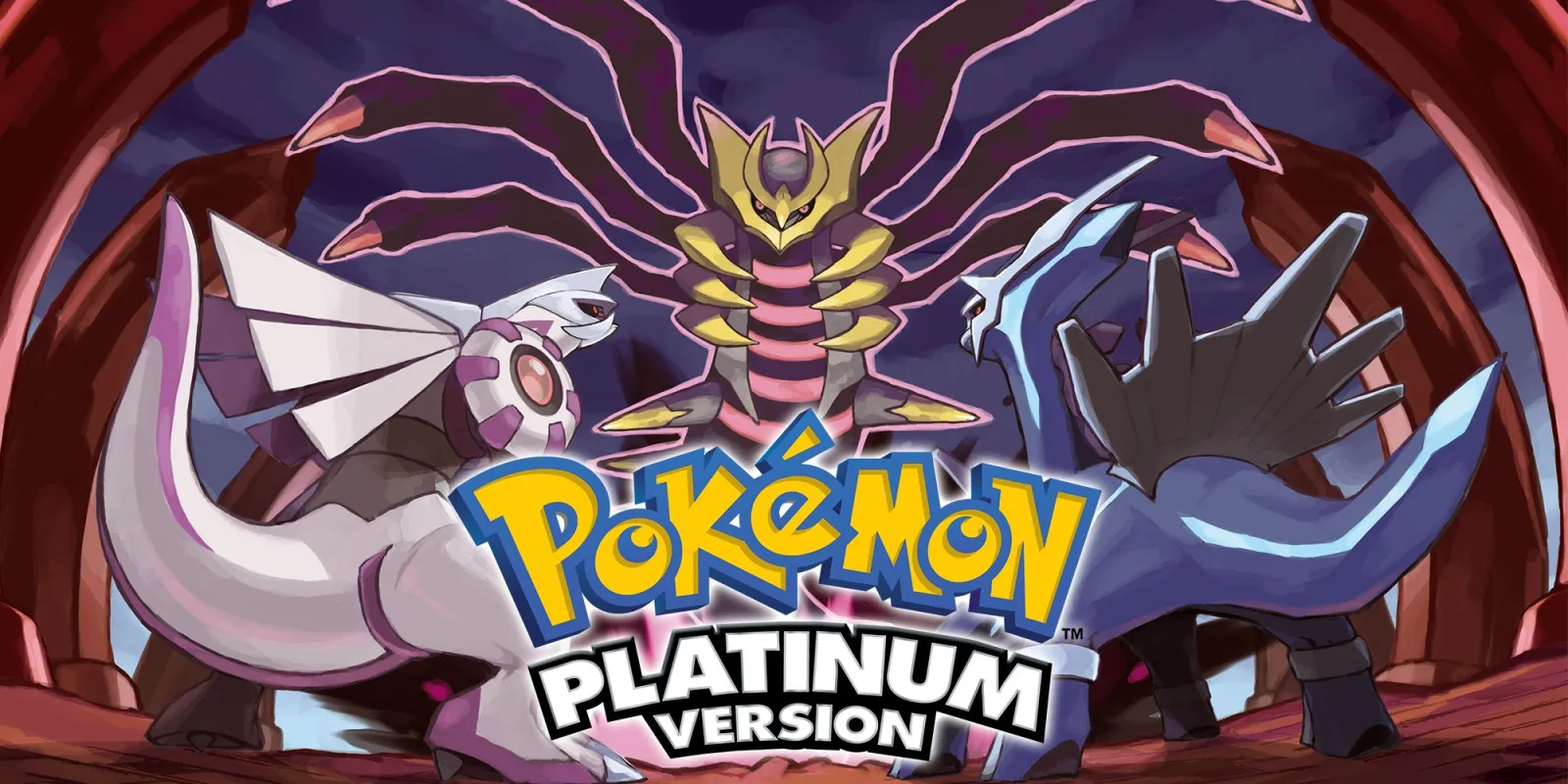
Pokémon Platinum, released in Japan in September 2008 and internationally in the spring of 2009, was Game Freak’s direct response. It is the rare “third version” that doesn’t just add content — it fixes the game.
Release Timeline
Sales Performance
The 43% retention rate from Diamond/Pearl to Platinum is a strong result for a “third version” product — a market segment historically expected to contract once the casual audience has already completed the main story. Japan was especially emphatic: the game sat at the top of the software charts for its opening weeks and drove the franchise to record-setting DS launch velocity.
Fixing the Pokédex
The most structurally important change was the expansion of the Sinnoh regional Pokédex from 151 to 210 entries. The 59 added lines were deliberately chosen to resolve the type droughts that defined the original games’ balance problems.
Flint’s Fire-type drought was solved directly. The Houndour line, the Magby evolutionary chain (culminating in Magmortar), and all eight Eevee evolutions including Flareon now appear naturally during the main campaign. The Ice-type and Electric-type rosters received similar treatment, with the Swinub line giving access to Mamoswine, and both the Elekid and Magnemite lines now accessible before the Pokémon League.
| Type Problem Solved | Key Additions | Impact |
|---|---|---|
| Fire (critical drought) | Houndour/Houndoom, Magby/Magmar/Magmortar, Flareon | Flint now runs a genuine Fire-type team |
| Electric | Elekid/Electabuzz/Electivire, Magnemite/Magneton/Magnezone | Volkner’s team replaced; no more Ambipom fillers |
| Ice | Swinub/Piloswine/Mamoswine, Snorunt/Glalie/Froslass | Candice’s Gym now has genuine depth |
| Ghost/Dragon | Giratina (#210), Duskull/Dusclops/Dusknoir | Mascot now accessible pre-credits |
| Versatility | All 8 Eeveelutions, Ralts/Kirlia/Gardevoir/Gallade, Rotom | Team-building options radically expanded |
Engine Optimisations
Beyond roster expansion, Game Freak addressed the performance complaints point by point. The surfing overworld speed was restored to the brisk pace of Generation III games. The forced bicycle dismount at route gatehouses was removed. Arbitrary delays between battle text boxes and animation triggers were eliminated.
The most often-cited benchmark in the speedrunning community involves a high-HP Blissey being knocked out by Close Combat. In Diamond and Pearl, the HP bar drain animation takes 36 seconds to resolve. In Platinum’s optimised engine, the same interaction completes in 32 seconds. Across a 40-hour playthrough, those seconds compound into a meaningfully smoother experience.
Giratina & the Forme System
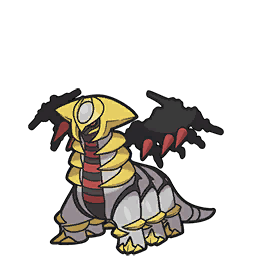
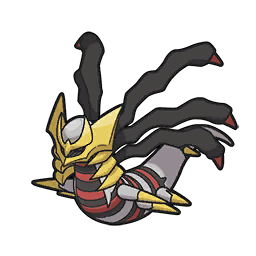
Platinum’s marketing was built around Giratina’s transformation. The legendary’s “Altered Forme” appeared briefly in Diamond and Pearl; in Platinum, the “Origin Forme” takes centre stage as the game’s cover mascot.
Shaymin’s Sky Forme was also introduced: using a Gracidea flower obtained in Floaroma Town converts the Gratitude Pokémon into a canine-shaped, Grass/Flying dual-type form with dramatically elevated Speed and Special Attack, and the ability Serene Grace (doubling secondary effect chances). Rotom gained its five appliance forms in a hidden room inside the Galactic Eterna Building, each granting a new powerful elemental move and a substantial base stat boost.
The Distortion World
In Diamond and Pearl, the climax at Spear Pillar is an encounter with Dialga or Palkia. In Platinum, Cyrus summons both simultaneously — and the sheer energy provokes Giratina’s intervention. The game tears open a dimensional rift and drags the player into the Distortion World.
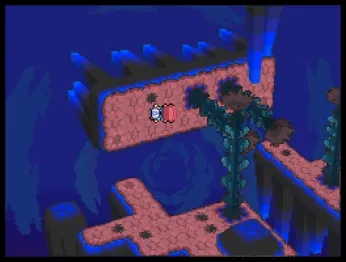
The Distortion World is the most ambitious level design in the franchise to that point. The camera dynamically rotates between top-down and isometric perspectives. Players walk along vertical waterfalls that flow backward, cross platforms suspended at ninety-degree angles to one another, and traverse ceilings as floors. The final boss sequence — a battle with Cyrus followed immediately by a Giratina encounter in its Origin Forme — is the narrative payoff.
Post-Game Legendaries
Platinum’s post-game roster of natively catchable legendaries is among the most generous in the DS era — ten distinct encounters accessible without events or Pal Park imports, spread across Sinnoh’s most remote locations.


The Battle Frontier
Platinum replaces the base games’ modest Battle Park with the Battle Frontier — a sprawling post-game complex containing five facilities, each governed by an elite Frontier Brain. It is the definitive endgame of the two-dimensional Pokémon era.
Critical & Community Reception
The professional consensus was firmly positive, anchored by an aggregate Metacritic score of 83/100 from 46 reviews. IGN awarded 8.8/10, highlighting the fleshed-out online functionality and expanded single-player scope. GameSpot gave 8.0, specifically praising the Distortion World and the Battle Frontier’s depth. Nintendo Power’s 90/100 was the high-water mark among major outlets.
The primary critical caveat was aimed at returning players: those who had spent hundreds of hours in Diamond or Pearl might find the early-game repetition a deterrent for a full-price second purchase. This is the perennial criticism of the enhanced-version model and, in hindsight, says more about the structural limitations of the format than about the game’s quality.
The retrospective community verdict is considerably warmer. The 8.9 user score — meaningfully higher than the critical aggregate — reflects a consensus that solidified over the following decade. Platinum is now widely regarded as rendering Diamond and Pearl functionally obsolete for anyone starting the Sinnoh story fresh. It is frequently cited as the high-water mark of the franchise’s pixel-art era, a status that gained additional resonance when Brilliant Diamond and Shining Pearl (2021) controversially omitted the Distortion World and Battle Frontier entirely.
Collector’s Market
On the secondary market, verified authentic cartridges now command a significant premium over their original retail pricing (£29.99 RRP in the UK; $39.99–$44.99 in the US). Counterfeit reproduction carts — common, cheaply priced, and often visually convincing — have driven up the value of confirmed authentic copies considerably.
Legacy
Pokémon Platinum is, ultimately, the definitive argument for what a third version should be. It didn’t merely add a dungeon and a new legendary encounter. It fixed the engine, rebuilt the Pokédex, restructured the gym order, rewrote the villain’s characterisation, and added the most mechanically intricate post-game the franchise has produced.
The 7.60 million sales figure places it above every other third version in franchise history except Pokémon Yellow, and its collector valuation continues to climb as authentic boxed copies grow scarcer. Its retrospective reputation is now effectively settled: if you want to play through Sinnoh, Diamond and Pearl are the drafts. Platinum is the finished work.