Mitsuhiro Arita: The Man Who Drew Pokémon
Nearly 30 years, 800+ cards, and one chubby Pikachu that changed everything. How a self-taught electrical engineering graduate became the visual architect of the world's most profitable franchise.
The Illustrator Who Built a World
In 1996, a self-taught freelance illustrator was handed some low-resolution Game Boy sprites and asked to make cards for an unproven card game. He was mainly worried about where his next job was coming from. The game was Pokémon. The illustrator was Mitsuhiro Arita.
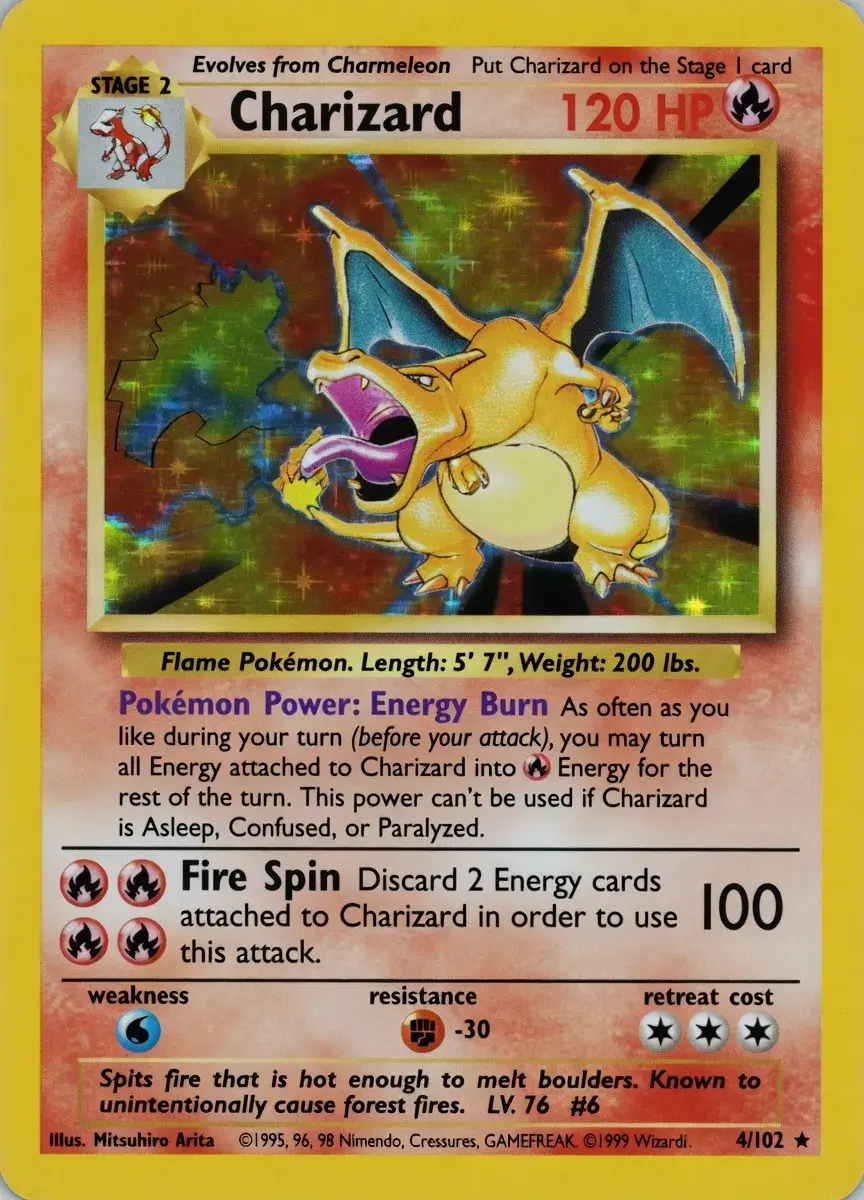
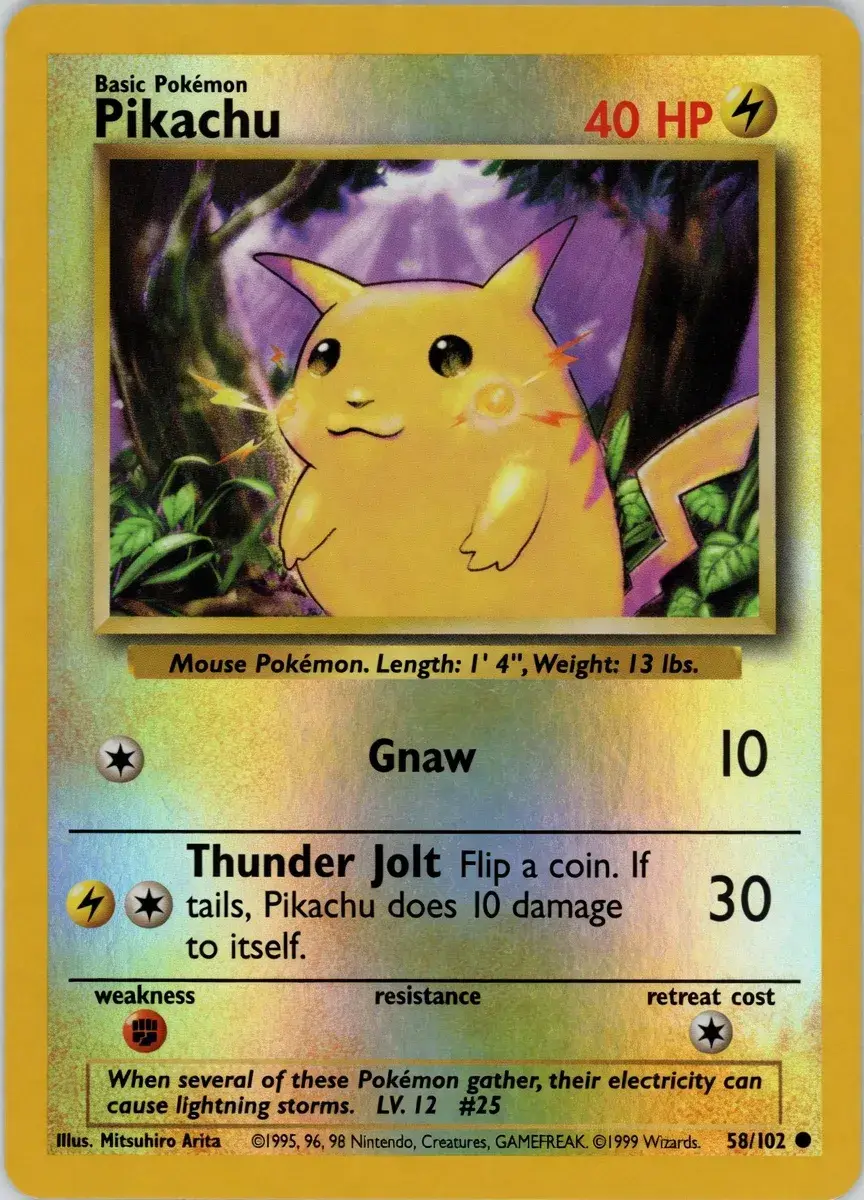
Since then, Arita has illustrated over 800 cards across nearly every major Pokémon TCG expansion. He painted the Base Set Charizard that now sells for seven figures. He gave Pikachu its chubby form.
No illustrator in any trading card game has shaped a franchise's identity as deeply, or for as long.
From Dinosaurs to Electrical Engineering
Arita was born on 12 January 1970 in Fukuoka. As a kid he drew and sculpted dinosaurs in clay with his father — a habit he credits, in retrospect, with building his instinct for three-dimensional volume. At university he was studying electrical engineering, and had already done pixel art work on an unreleased Enix project in high school. The creative and technical sides were always tangled together.
Rejecting the Safety Net
In his third university year, his father offered him a place in the family industrial supply business, succession implied. Arita turned it down.
His reasoning: if the business struggled or he hated it, he'd always have the excuse that it wasn't really his choice. He wanted a career where failure was entirely his own problem.
He went freelance with no training and no portfolio. The first three years nearly broke him — he scraped work through Shinkigensha, a publisher producing reference books for game and novel creators, and at one point was close to not eating. His survival strategy was to take every job regardless of genre or style, which accidentally made him exactly the kind of generalist the exploding Japanese card game market would need.
Into the Pokémon TCG
Creatures Inc. hired Arita in 1996 to illustrate cards for a game based on RPGs nobody had finished yet. His only reference was blurry Game Boy sprites, and the franchise was unproven enough that he was already thinking about his next gig before this one ended. Not knowing how big Pokémon would become turned out to be useful — he had no canon to preserve, no brand guidelines to follow.
The Naturalistic Mandate
Other early illustrators put Pokémon on white backgrounds. Arita interrogated the developers about each creature's habitat and put them there — Nidorino against canyon rock, Dragonair under an aurora. They weren't decorative choices; they gave the game a coherent world rather than a floating catalogue of characters.
Collectors responded in ways nobody at Creatures Inc. had expected.
The Pikachu Problem
Arita's Base Set Pikachu is notably round — rounder and stockier than the sprite, with a warmth that makes it feel like something you could actually pick up. That version defined the character globally for years and still shows up in modern throwback designs like the Gigantamax form. His Charizard is the other end of it: aggressive, mid-motion, wings spread — the thing every collector wanted and every kid was desperate to pull. Pristine copies now break records in the millions.
Hokusai, Mobile Painting, and the Life Spirit
Katsushika Hokusai
Arita's biggest stated influence is Hokusai — specifically the idea that Hokusai, despite painting his whole life, considered nothing he made before seventy to be genuinely good. Arita takes this seriously; his entire career he treats as a foundation still being laid, not a legacy already earned.
What he admires in Hokusai's work is the ability to convey the life spirit of a subject — the animating force rather than the likeness. It's why Arita's Pokémon feel like animals.
Mobile Painting
Arita is self-taught, so he treats sketching as professional maintenance rather than hobby. He calls it "Mobile Painting" — drawing constantly in transit, particularly on trains, where the instability forces real spatial problem-solving that a comfortable studio lets you avoid. He spent three years observing the visual differences between accumulating snow, settling snow, and melting snow before using that knowledge in card environments.
His rule: inspiration taken from films, music, or other illustration doesn't count. It has to come from life.
The Hybrid Technique
Why He Still Draws in Pencil
Arita doesn't trust purely digital workflows, and has a specific reason: digital tools make revision free.
Because you can always undo, you never fully commit — and the resulting work loses the tension that comes from decisions made under consequence.
He drafts entirely in graphite. White coloured pencil for highlights, gouache masking to define colour regions. Only after that physical foundation is built does the image get scanned and finished in Corel Painter — the result is digital smoothness sitting on top of an analogue texture you can see if you look closely.
The 34mm Problem
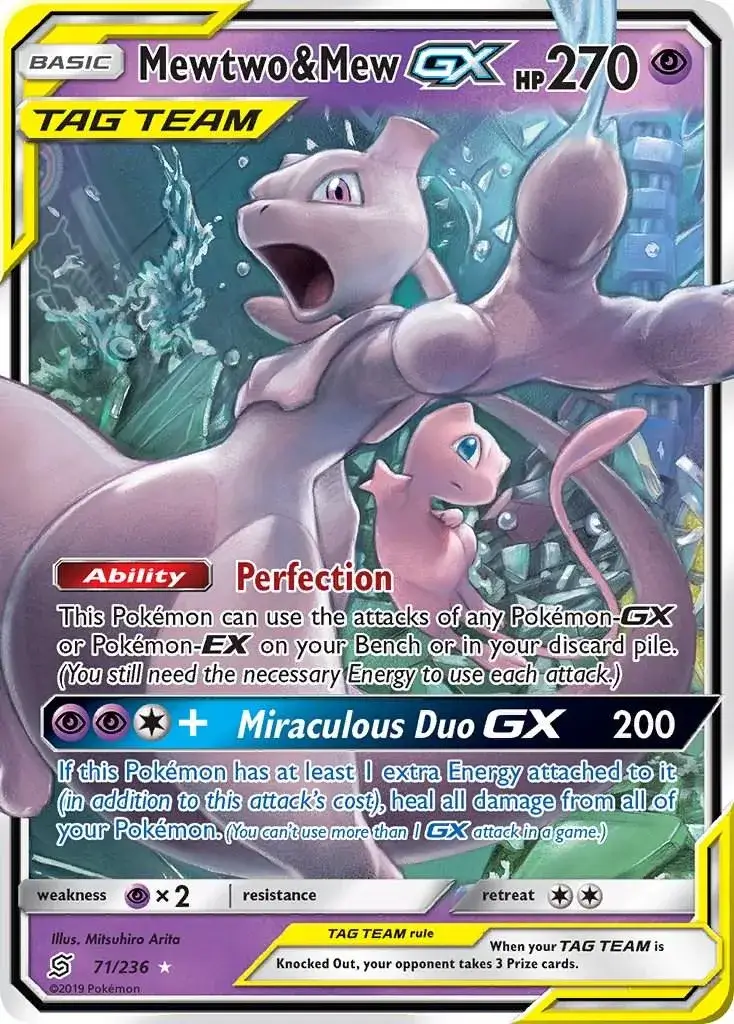
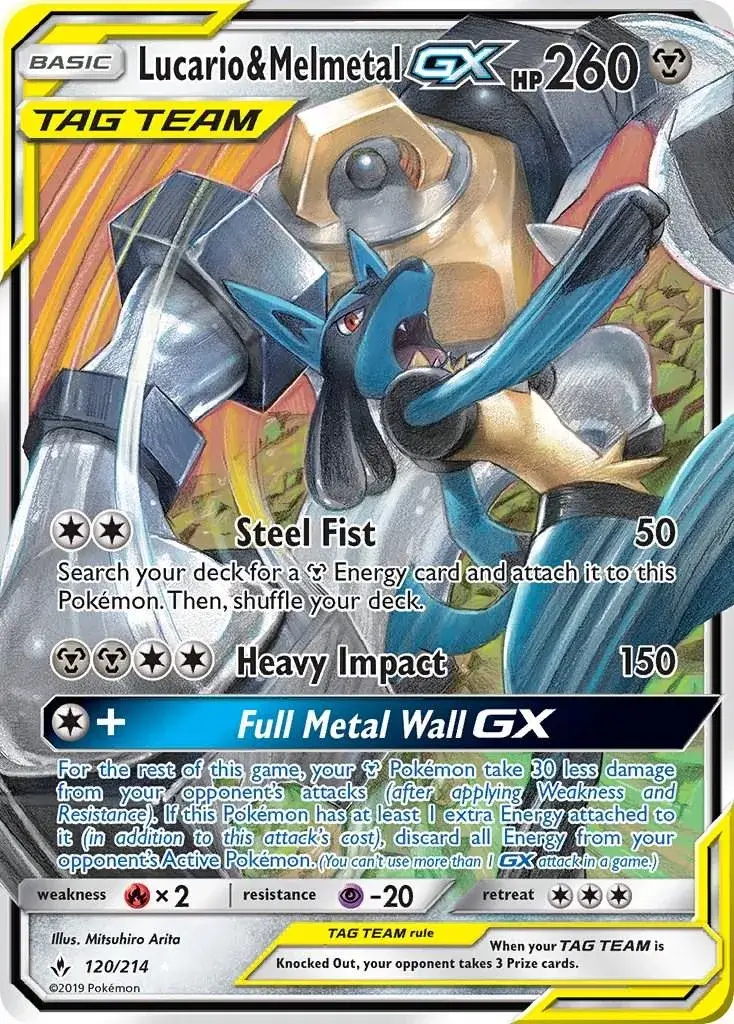
A card is 34mm wide. Fitting a wide creature into that space means Arita typically tilts them along a diagonal, tricking the eye into reading the frame as wider than it is. The TAG TEAM GX era pushed this further — the Lucario and Melmetal card required two very different characters to share a cramped frame at equal visual weight. His solution was to let Melmetal's outline spill slightly past the implied border: technically a rule break, practically the only thing that works.
Colour Theory Over Realism
Early in his career, designer Koichi Oyama told him a forest background doesn't need to be green. Arita took that and ran — his forest environments often read deep purple, which maximises contrast against a yellow character like Pikachu. The colour is there to keep the subject dominant, not to accurately represent the ecosystem.
Career in Eras
Beyond Pokémon
Taking every job during his lean early years meant Arita built a portfolio that runs well beyond the TCG. His longest external commitment was eleven years on Final Fantasy XI Online — promotional art, seasonal event illustrations, web content — with Square Enix still using his original XI work in anniversary releases as late as 2020. He was also lead concept designer on the theatrical Berserk: The Golden Age Arc trilogy (2012–13), producing background designs for Kentaro Miura's dark fantasy; a sharp tonal contrast to anything in the TCG, collected in dedicated Japanese artbooks.
He illustrated nearly 100 cards for the Culdcept board game series, contributed to Monster Hunter and Kamen Rider card properties, and crossed into Western TCG territory with "Lumra, Bellow of the Woods" for Magic: The Gathering's Bloomburrow Secret Lair. He also provided artwork for Japanese editions of Kathryn Lasky's Guardians of Ga'hoole novels — expressive, behaviourally convincing animals being exactly what that series needed.
The Ecosystem He Helped Build
Arita sits at the top of a roster of foundational TCG artists, each of whom approached the medium differently.
| Illustrator | Primary Contribution | Key Stylistic Traits | Card Count |
|---|---|---|---|
| Mitsuhiro Arita | Environmental realism; documentary-style worldbuilding; dynamic action | Pencil drafting, gouache masking, diagonal spatial management, complementary colour contrast | 800+ |
| Ken Sugimori | Original character anatomical blueprints; prolific canonical volume | Light watercolour, clean linework, stark white backgrounds | 969+ |
| Atsuko Nishida | Emotional resonance; kawaii aesthetic; original mascot designer (Pikachu) | Soft pastel palettes, diffused lighting, character intimacy over environmental drama | 446+ |
| Kagemaru Himeno | High-contrast vivid colour; dramatic light and shadow | Soft undershading against bright highlight colours; style evolved toward full environmental integration | 633+ |
| Yuka Morii | Medium innovation — photographed clay sculptures | Three-dimensional tactile quality unique in the TCG format | 150+ |
| Shinji Kanda | Surrealist complexity; modern market premium | Obsessive linework, textured scribbling, atmospheric density that rewards repeated inspection | 50+ |
Sugimori's cards are the blueprint. Nishida's create emotional attachment. Arita's make the world feel real. None of them is the complete picture on their own.
The Market for Arita's Work
The kids who had Base Set cards are adults now, and they have money. Vintage Pokémon has crossed into alternative asset territory, and Arita's work sits at the top of that market.
| Card | Set / Origin | Grade | Sale Value |
|---|---|---|---|
| Charizard (No Rarity Symbol) | Japanese Base Set, 1996 | PSA 10 | $1,700,000 |
| Charizard (Signed Slab) | Japanese Base Set, 1996 | PSA 10 (Auth.) | $1,232,200 |
| Venusaur (No Rarity, Signed) | Japanese Base Set, 1996 | PSA 10 | $55,000 |
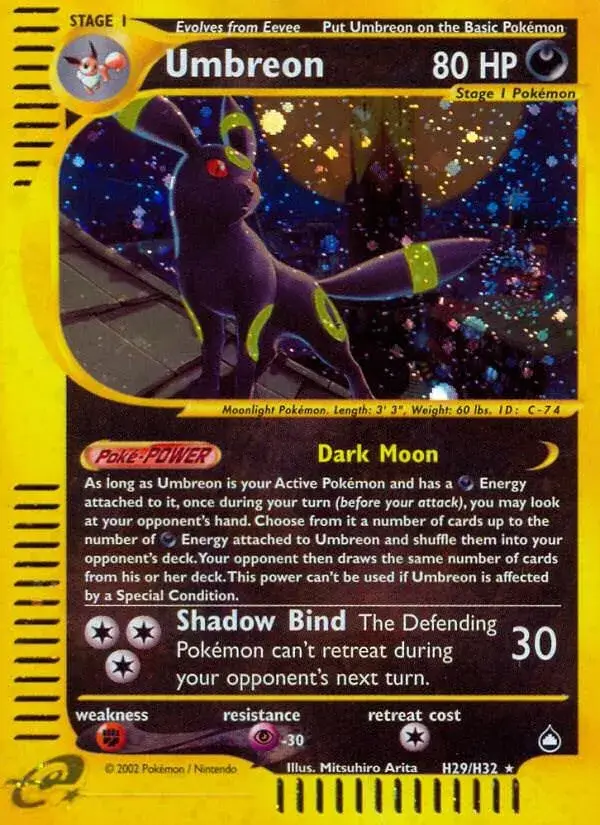
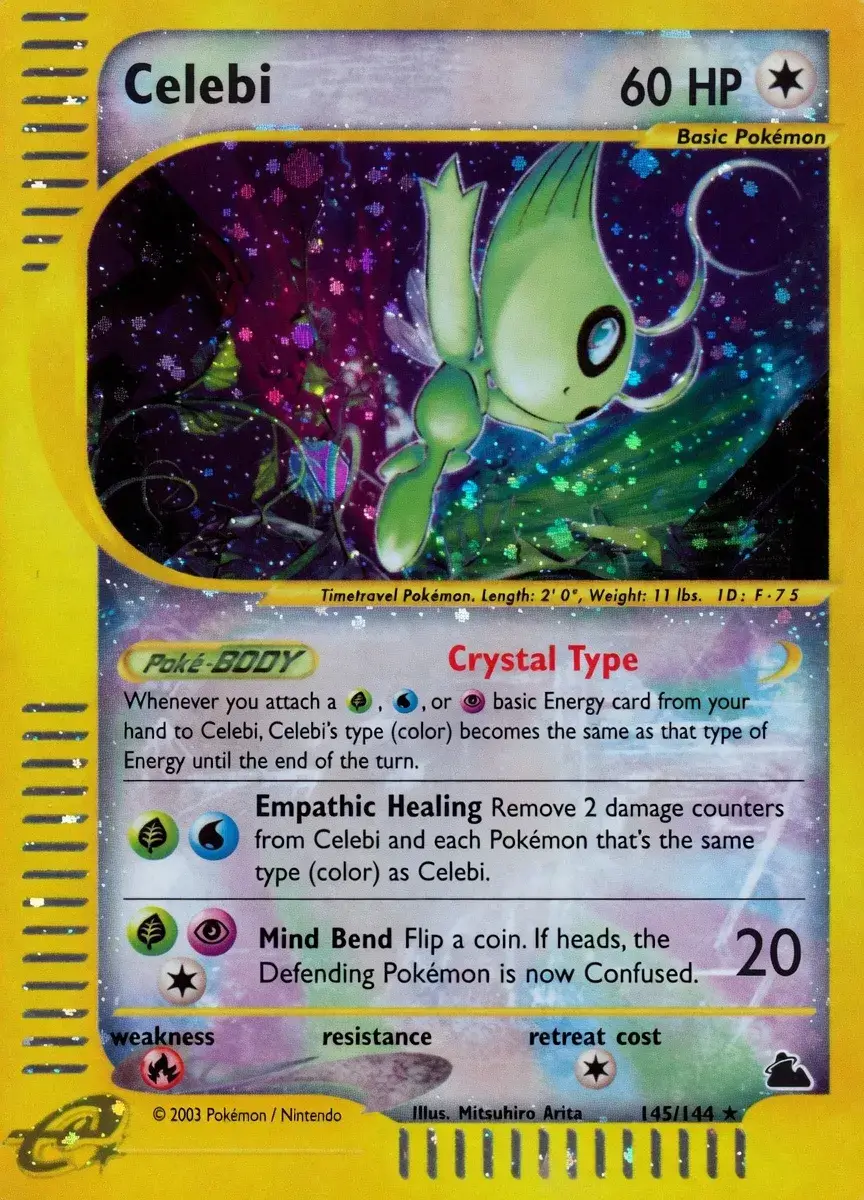
| Aquapolis Umbreon Holo | Aquapolis (e-Reader), 2003 | High Grade | Grail; competitive market movement |
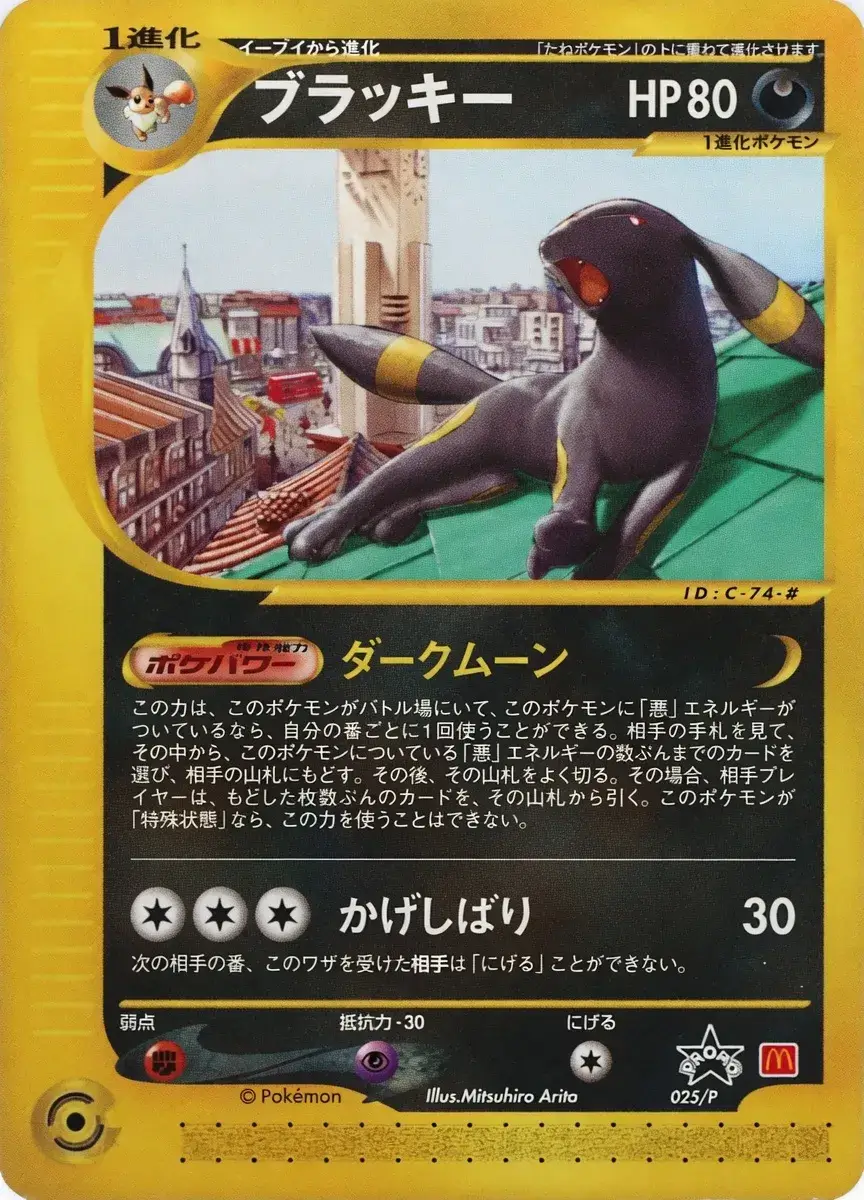
| Umbreon 025/P (Signed) | Japanese McDonald's Promo, 2002 | Authenticated | Grail; competitive market movement |
In March 2026 a pristine Japanese No Rarity Charizard sold for $1.7 million — the most expensive Charizard ever. His signature on a slab commands a premium across the whole portfolio; a signed No Rarity Venusaur fetched $55,000 at PWCC in 2021. His e-Reader era Umbreon work — the Aquapolis holo and the 2002 McDonald's promotional Umbreon — are among the most competitive grail cards in the signed promo market.
Card Gallery
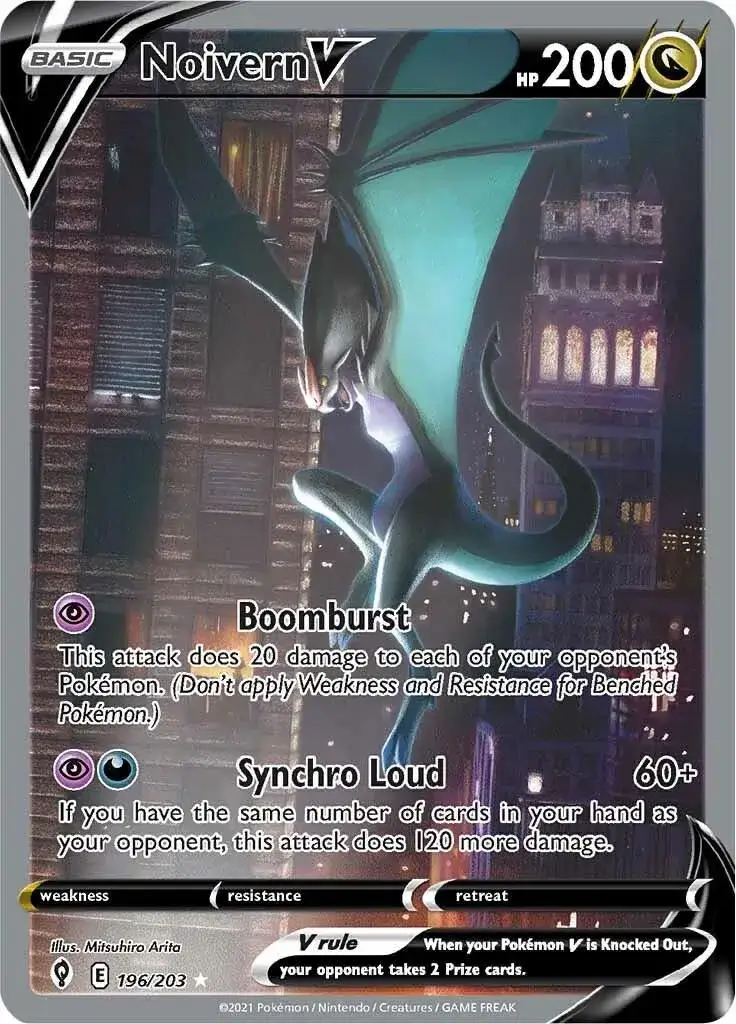

What He Actually Built
Calling Arita's career a remarkable run of longevity undersells it. The visual language he established in 1996 — Pokémon in their habitats, in motion, in a world — is still the default assumption of TCG illustration in 2026. Every artist who joined after him inherited that paradigm. The fact that a card by Shinji Kanda now commands a price premium purely on the illustrator's name exists because Arita spent thirty years demonstrating that a Pokémon card could be a genuine piece of art.
He did it without formal training, without a safety net, and with no idea in those early years that the franchise would matter at all.
He was just trying to get his next job.
A closer look at the illustrators who shaped the Pokémon TCG — their backgrounds, techniques, and the cards that defined them.