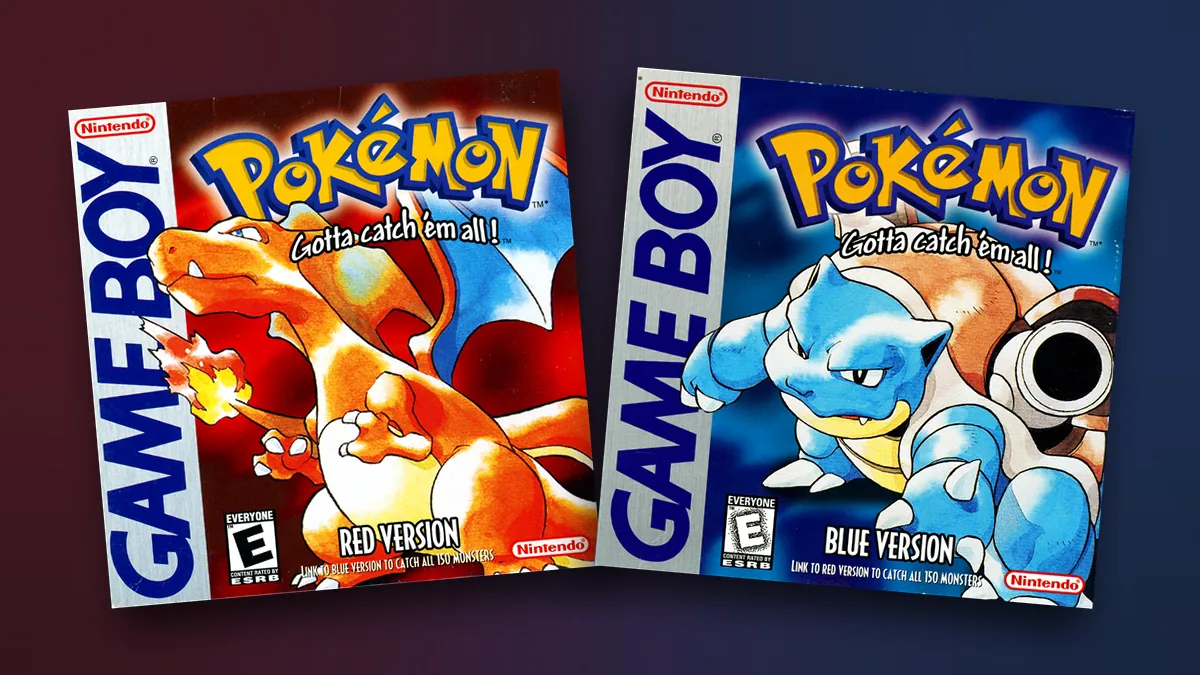
On 28 September 1998, Pokémon Red Version and Pokémon Blue Version went on sale in North America for the Game Boy, at $29.95 each. They came 944 days after Japan’s Red and Green, three weeks after the anime reached American television and seven weeks before the Game Boy Color. Counted with Japan’s Red, Green and Blue, they have sold more than 31 million copies, more than any Pokémon game since.
The launch
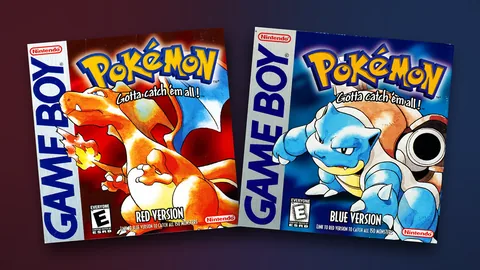
Nintendo of America’s press release that day called it “our biggest launch of a Game Boy title ever”. Pokémon arrived as a package: the English dub of the anime had started in first-run syndication on 8 September, five days a week, so by launch day children had already met Ash and Pikachu. Nintendo put more than $14 million into marketing the games, with Hasbro toys due in November and a Wizards of the Coast card game on the way. Both boxes carried the new English slogan under the logo: Gotta catch ’em all!
It worked. Red and Blue sold 200,000 copies in their first two weeks, the fastest start of any Game Boy game at the time, and in 1999 they were the best-selling video game in the United States, with 6.1 million copies that year alone.
- 27 Feb 1996
Japan: Pocket Monsters Red and Green
- 15 Oct 1996 · +231 days
Japan: Pocket Monsters Blue
- 28 Sep 1998 · +944 days
North America: Pokémon Red and Blue
- 23 Oct 1998 · +969 days
Australia
- 5 Oct 1999 · +1,316 days
Europe
Australia got the games 25 days later. Europe waited more than a year, until 5 October 1999.
Red, Blue and the missing Green
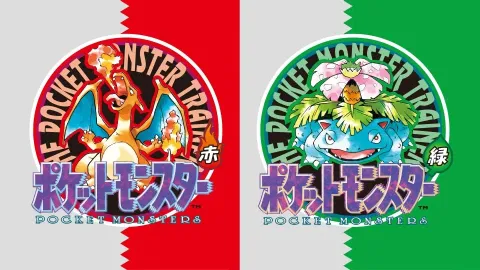
There was never an English Green. Translating the text turned out to mean reprogramming the games, so Nintendo built the English versions on the later Japanese Blue, with its redrawn Pokémon and tidied-up script, and kept the original split of Pokémon: English Red has Japanese Red’s exclusives and English Blue has Green’s. A small team renamed all 151 Pokémon for English speakers, and Nintendo trademarked every name. The Western team also reportedly asked for the “cute monsters” to be made tougher for American children. Nintendo’s president, Hiroshi Yamauchi, said no.


 BlueJapan, Oct 1996, and English Red & Blue


Each version has 11 Pokémon the other cannot catch. That is where the back of the box gets its number: Red owners can “collect up to 139 different Pokémon”, which is 150 minus the 11 found only in Blue. The rest had to come over a Game Link cable, sold separately. Even the intros differ: Red’s opening fight is Gengar against Nidorino, as in Japan’s Red and Green, while Blue’s swaps in Jigglypuff from Japanese Blue.
 EkansNo. 023
 ArbokNo. 024
 OddishNo. 043
 GloomNo. 044
 VileplumeNo. 045
 MankeyNo. 056
 PrimeapeNo. 057
 GrowlitheNo. 058
 ArcanineNo. 059
 ScytherNo. 123
 ElectabuzzNo. 125
 SandshrewNo. 027
 SandslashNo. 028
 VulpixNo. 037
 NinetalesNo. 038
 MeowthNo. 052
 PersianNo. 053
 BellsproutNo. 069
 WeepinbellNo. 070
 VictreebelNo. 071
 MagmarNo. 126
 PinsirNo. 127
The box
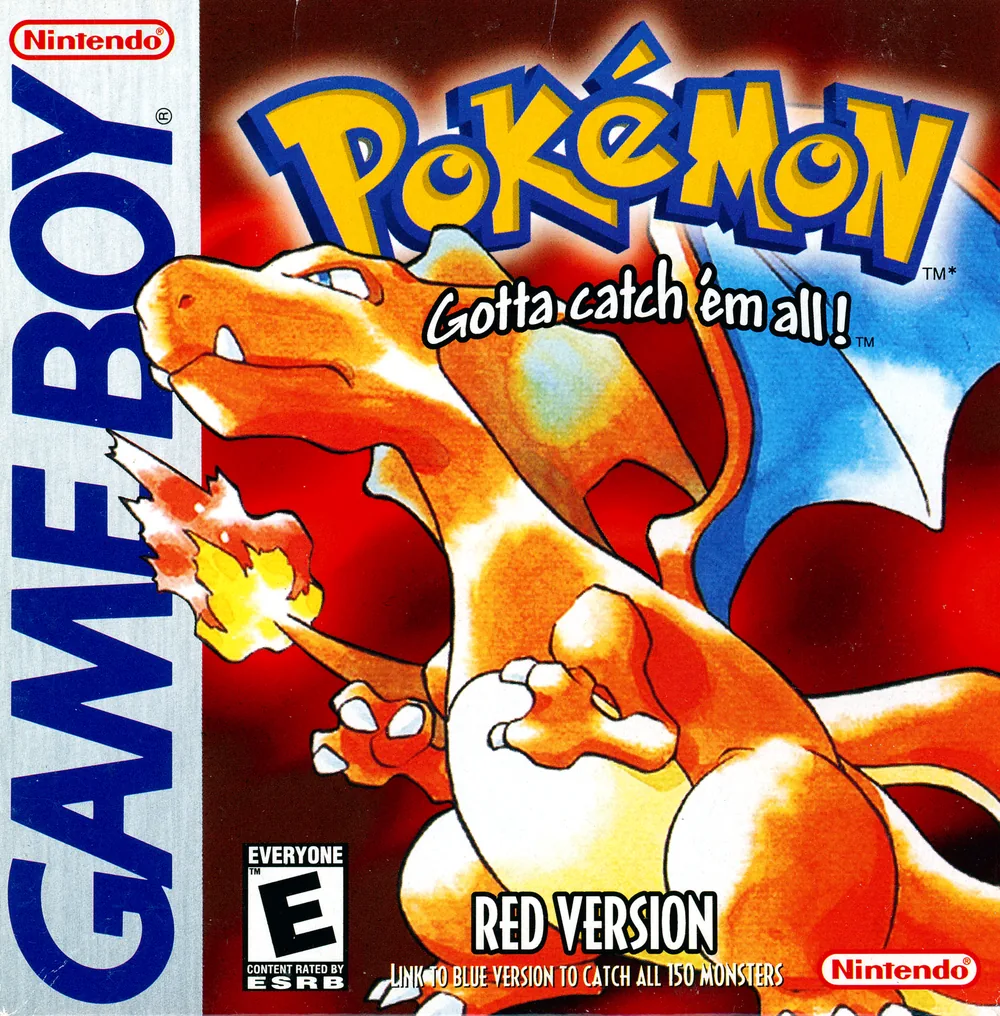
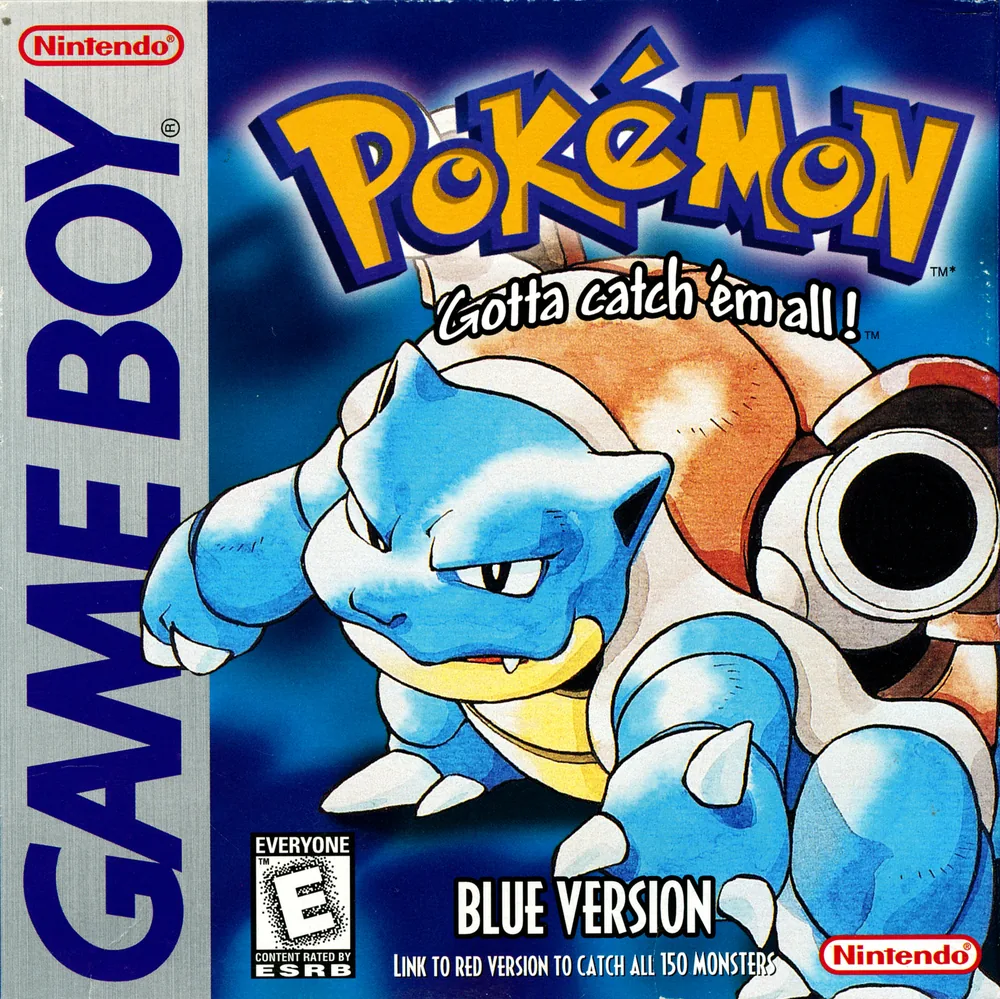
Both fronts promise to “catch all 150 monsters”, not 151, and Nintendo’s launch press release counted 150 too: Mew, No. 151, was kept off the count. The back sells the game in five bullet points and ends on one that has aged well, warning that it “requires basic reading skills to fully enjoy the entertaining story”. It also shows the game on a television through the Super Game Boy adapter for the Super Nintendo, which gave each Pokémon its own colour.
What it is worth today
Red and Blue sold in huge numbers, so a loose cartridge is still cheap for a 28-year-old game, at about twice its $29.95 launch price. The box is the scarce part: on its own it now sells for more than three times the price of the cartridge. PriceCharting’s listed prices on 27 September 2026, with sterling at $1 = £0.7546:
| Condition | Pokémon Red | Pokémon Blue |
|---|---|---|
| Loose cartridge | $59.99£45 | $51.26£39 |
| Box only | $193.75£146 | $176.69£133 |
| Complete in box | $430.00£324 | $350.00£264 |
| Sealed | $3,500.01£2,641 | $1,481.33£1,118 |
Sealed copies rarely change hands (PriceCharting logs about one sale a month for Red), so treat those two figures as a guide rather than a price.
Check it is genuine. Red and Blue are among the most counterfeited Game Boy games. Ask for a photo of the circuit board, not just the label: a genuine board is marked Nintendo.
Check it saves. Both games keep your file in memory powered by a CR2025 coin-cell battery. After 28 years many of those batteries are flat, and a cartridge with a dead one forgets your game every time it is switched off until the battery is replaced.
Playing it today
| Where | Status in September 2026 |
|---|---|
| Original cartridge | Plays on the Game Boy, Game Boy Pocket, Game Boy Color, Game Boy Advance and Advance SP, and on a TV through the Super Game Boy or the GameCube’s Game Boy Player. It does not fit a Game Boy Micro or any DS. |
| Nintendo 3DS Virtual Console | On sale from 27 February 2016, the 20th anniversary, until the 3DS eShop closed on 27 March 2023; owners can still download it again. Poké Transporter can send its Pokémon to Pokémon Bank until Bank closes on 26 February 2027. |
| Nintendo Switch | Not available. Nintendo re-released the 2004 remakes, FireRed and LeafGreen, on 27 February 2026 instead, and says it has nothing to announce about the originals. |
The 3DS versions of Red, Blue and Yellow sold 1.5 million copies in five weeks, more than half of them in North America, but Nintendo passed on the originals for Switch, saying players would prefer the remakes’ added features. So Kanto on a Switch today means FireRed and LeafGreen, and the 1998 games mean a cartridge.
In the card game
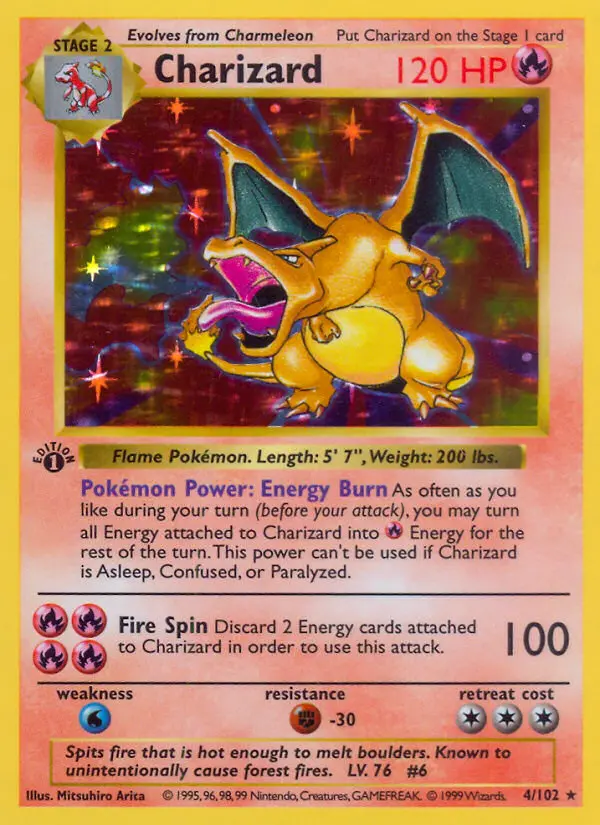
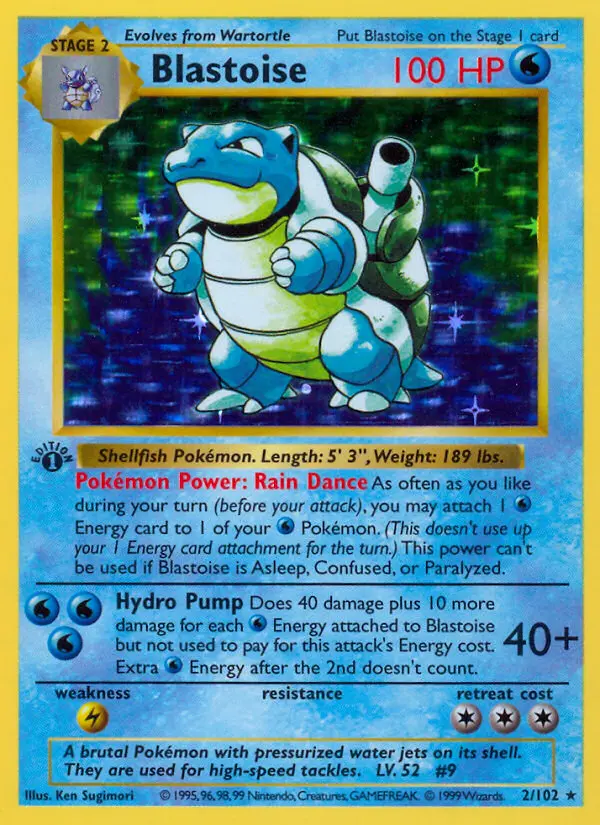
The trading card game promised in the launch press release followed 103 days later. Wizards of the Coast released the English Base Set on 9 January 1999, and the two box mascots became two of its best-known holos: Charizard 4/102 and Blastoise 2/102. Every card and price is on the Base Set page, and the Gym Leaders and Elite Four are in the Red and Green game guide. This month’s 30th Celebration set nods to all three original versions with its secret RGB Mew cards.