Pokémon TCG Card Rarities Explained: From Common to Special Illustration Rare
Understanding rarity symbols, texture differences, and how the system has evolved across nearly three decades of collecting.
If you've ever opened a Pokémon booster pack, you've experienced that moment of anticipation — flipping to the back of the pack to see what rarity awaits. But the rarity system that governs which cards are common and which are chase-worthy has changed dramatically since the game's 1996 debut in Japan.
Today's collectors navigate a far more complex landscape than early players did. What was once a simple hierarchy of Common, Uncommon, and Rare has evolved into a multi-tiered system featuring textured cards, illustration rares, and ultra-premium variants that command hundreds — sometimes thousands — of dollars.
Let's break it all down.
The Classic Rarity System (1996–2016)
For the first two decades of the Pokémon TCG, the rarity system remained relatively straightforward. Cards were identified by a small symbol in the bottom-right corner:
- Circle (●) — Common
- Diamond (◆) — Uncommon
- Star (★) — Rare
Within the Rare category, cards could be either non-holographic or holographic. Holographic rares featured that iconic foil pattern across the artwork — the shimmer that made cards like Base Set Charizard so desirable. These holos were the original chase cards, and their tactile difference from regular cards made them instantly recognizable.
Early Ultra Rares and Secret Rares
As the game matured, The Pokémon Company introduced additional layers above standard rares. The EX era (2003–2007) brought Pokémon-ex cards with extended artwork and higher HP. Later, during the Diamond & Pearl and HeartGold & SoulSilver eras, we saw the introduction of Lv.X and LEGEND cards — premium variants that extended beyond the normal set numbering.
These "secret rares" were identified by their set number exceeding the official count. A card numbered 103/102 clearly sat outside standard pull rates, signalling its exceptional rarity.
The original rarity system relied on visual distinction: holofoil patterns, extended artwork, and set numbering. Physical texture wasn't yet part of the equation.
The Sun & Moon Shift (2017–2019)
The Sun & Moon era marked a transitional period. While maintaining classic rarity symbols, it expanded the ultra rare category significantly with GX cards and introduced Rainbow Rare variants — cards featuring a prismatic, multi-coloured holofoil treatment.
Rainbow Rares became the new apex chase cards, replacing the role that secret rare full arts had previously held. They featured the same Pokémon as standard GX cards but with a distinctive rainbow colour palette that made them immediately recognizable.
While texture wasn't new to Sun & Moon — textured cards actually became mainstream during the Black & White era (2012), starting with the Next Destinies set — this era refined and expanded their use. Full Art EX cards like Mewtwo EX and Darkrai EX from 2012–2016 already featured distinct, fingerprint-like textures. Sun & Moon continued this tradition while introducing new variants like Rainbow Rares.
The Modern Rarity Overhaul: Sword & Shield (2020–2023)
The Sword & Shield era refined and expanded the rarity system substantially. While base rarities remained familiar, the premium tiers grew more complex:
| Rarity | Symbol | Texture | Description |
|---|---|---|---|
| Common | ● | None | Standard cards, multiple per pack |
| Uncommon | ◆ | None | Slightly harder to pull, often evolution stages |
| Rare | ★ | None | One guaranteed per pack (holo or non-holo) |
| Holo Rare | ★ | None | Holographic artwork pattern |
| Ultra Rare (V) | ★ | None | Pokémon V cards with extended art, smooth surface |
| Ultra Rare (VMAX) | ★ | Yes | Dynamax/Gigantamax forms, ridge-like texture |
| Full Art | ★ | Yes | Artwork extends to card edges, textured surface |
| Alternate Art | ★ | Yes | Unique artwork variants, highly collectible |
| Rainbow Rare | ★ | Yes | Multi-colour prismatic treatment |
| Gold (Secret Rare) | ★ | Yes | Gold-bordered cards, often items or energy |
The Rise of Alternate Arts
Sword & Shield's most significant contribution to collecting culture was the Alternate Art card. Unlike Full Arts (which simply extended standard artwork), Alternate Arts featured completely different illustrations — often with dynamic poses, unique settings, or charming slice-of-life scenes.
Cards like the Umbreon VMAX Alternate Art from Evolving Skies became iconic specifically because their artwork told stories. These weren't just powerful game pieces; they were miniature art prints that happened to be playable.
All Alternate Arts featured textured surfaces, making them feel premium in hand. The combination of exclusive artwork and tactile distinction created the modern chase card paradigm.
The Scarlet & Violet Revolution (2023–Present)
With Scarlet & Violet, The Pokémon Company completely overhauled rarity symbols and introduced terminology that better reflected the collectible nature of modern cards.
New Rarity Symbols: Colour Matters
The most critical change in Scarlet & Violet is that the colour of the star symbol now determines rarity tier. Two black stars and two gold stars represent completely different value brackets — a distinction the symbols alone don't convey without close inspection.
The classic circle, diamond, and single black star remain for Common, Uncommon, and Rare cards. However, premium tiers now use coloured stars:
| Rarity | Symbol | Texture | Notes |
|---|---|---|---|
| Common | ● | None | Bulk cards |
| Uncommon | ◆ | None | Bulk / playable Trainers |
| Rare | ★ | None (but holo) | All Rares are now holographic |
| Double Rare | ★★ | None | Standard Pokémon ex cards |
| Illustration Rare (IR) | ★ | Glossy sheen | Full art regular Pokémon, no etched texture |
| Ultra Rare (Full Art) | ★★ | Yes | Full Art ex Pokémon and Trainers |
| Special Illustration Rare (SIR) | ★★ | Yes | Premium artwork, top chase tier |
| Mega Attack Rare (MAR) | ★★ | Yes | New in Ascended Heroes — Mega Pokémon ex |
| Hyper Rare (Gold) | ★★★ | Yes | Gold-etched cards, highest standard tier |
| Futuristic Rare | ✦ | Opalescent, holographic-shift | New in 30th Celebration — no star, YOSHIROTTEN-illustrated debut rarity |
Star colour key: ★ Black = Base tiers | ★ Silver = Full Arts | ★ Gold = Premium chase cards
Critical distinction: A Double Rare (★★ black) might be worth £1, while a Special Illustration Rare (★★ gold) of the same Pokémon could be worth £100+. Always check the star colour.
Understanding Special Illustration Rares
The Special Illustration Rare (SIR) has become the definitive chase card category for modern collectors. These cards feature:
- Two gold stars ★★ — distinguishing them from Double Rares (★★ black) and Ultra Rares (★★ silver)
- Unique, often panoramic artwork that differs entirely from the standard card
- Heavy etched texture with distinct ridges across the card surface
- Artistic storytelling — many SIRs depict Pokémon in natural settings or interacting with humans
It's important to distinguish SIRs from Illustration Rares (IR), which have only one gold star (★). IRs feature extended artwork and a glossy sheen, but lack the deep etched texture of SIRs. This texture difference is key for authentication and significantly affects value.
Pull rates for SIRs vary by set, but they typically appear in roughly 1 in 50 to 1 in 100 packs, making them genuinely difficult to obtain through casual pack opening.
Hyper Rares: The Gold Standard
Hyper Rares — often called "Gold Cards" — represent the highest standard rarity tier. These feature a distinctive gold-etched border and artwork, heavy texture, and the coveted three gold stars (★★★).
Hyper Rares typically include:
- Gold versions of key Pokémon ex cards
- Gold Tool and Item cards
- Gold Basic Energy cards (highly sought after for competitive play and collecting)
While not always the most valuable cards in a set — that honour often goes to popular SIRs — Hyper Rares command respect as the objective top of the rarity ladder.
Mega Attack Rares: A New Chase Tier
Introduced in Ascended Heroes (August 2025), the Mega Attack Rare (MAR) represents a significant addition to the Scarlet & Violet rarity hierarchy. These cards feature:
- Two stars in pink and green ★★ — a unique colour scheme (pink on the left, green on the right) that instantly distinguishes them from other rarities
- Mega Pokémon ex — the return of Mega Evolution to the TCG, now as Mega ex cards
- Heavy etched texture with premium card stock
- Dynamic artwork showcasing Mega Evolved Pokémon in action
The distinctive pink and green star symbol makes Mega Attack Rares immediately identifiable — no other rarity tier uses this colour combination.
Futuristic Rare: A New Tier Outside the Star System
Debuting in 30th Celebration (16 September 2026), the Futuristic Rare is the first Scarlet & Violet-era rarity to break entirely from the star hierarchy. Rather than a coloured star count, it's identified by a striking opalescent, holographic-shift finish that shifts colour as the card catches the light — illustrated exclusively by Japanese artist YOSHIROTTEN.
- No star symbol — the opalescent foil treatment itself is the rarity marker
- Single artist — every Futuristic Rare is illustrated by YOSHIROTTEN, giving the tier a distinct visual identity across cards
- Anniversary exclusive — confirmed so far on Mewtwo ex, Mew ex, and two Pikachu ex variants (day & night) from the premium Futuristic Box
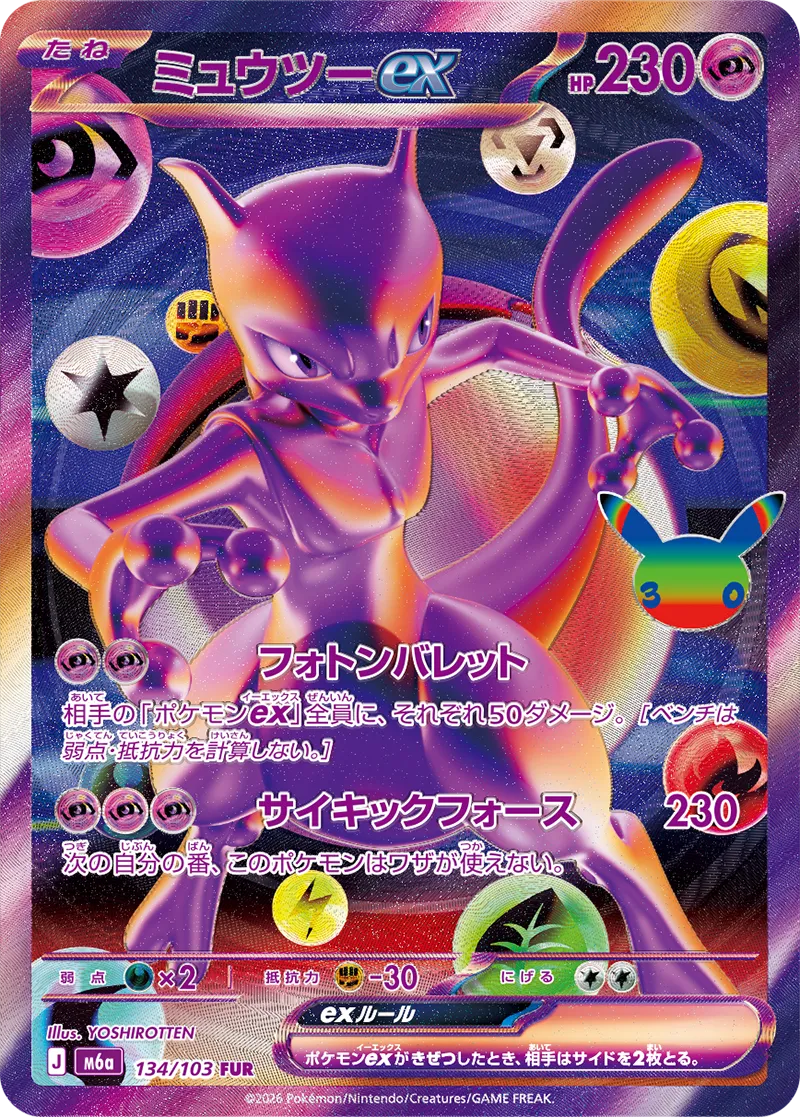
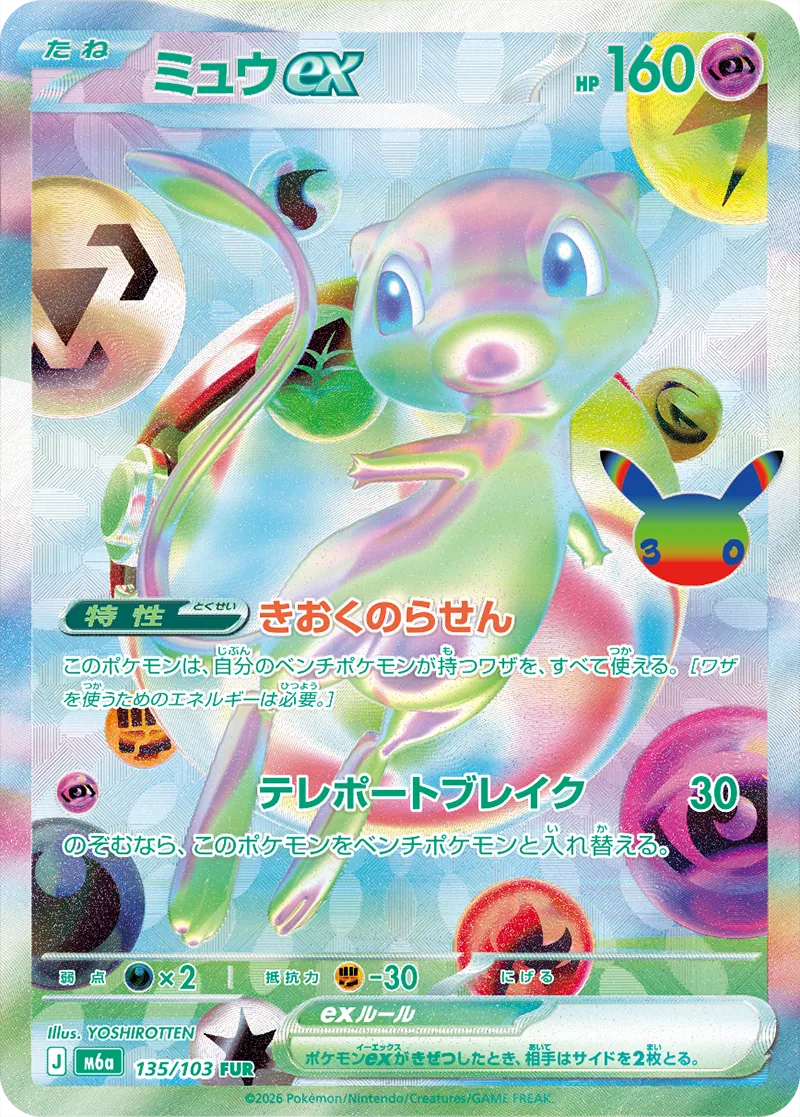
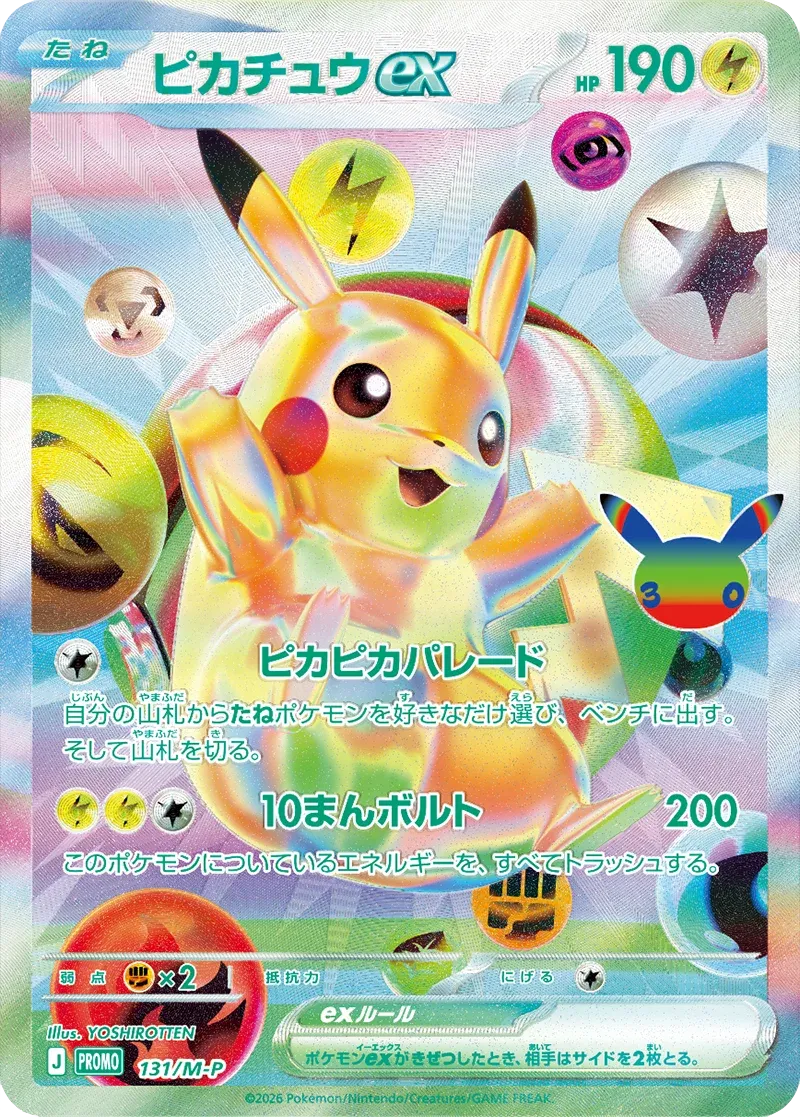
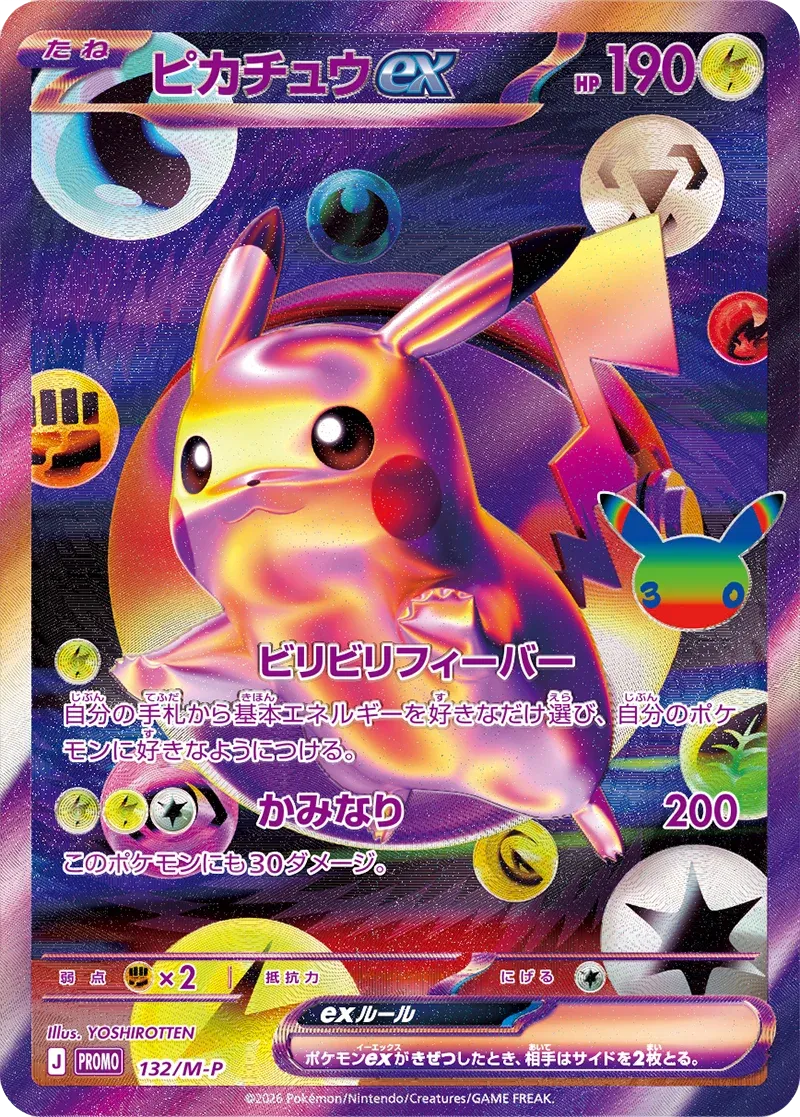
Because it launched outside the normal numbered progression, collectors shouldn't expect Futuristic Rares in future sets by default — it may remain a one-off anniversary tier, similar to how Shiny Vaults and Classic Collections were era-specific. See the full for every card confirmed so far.
Texture: The Hidden Premium
One of the most significant changes in Pokémon cards over the past decade is the use of texture as a rarity indicator.
Textured cards first became mainstream during the Black & White era (2012) with the Next Destinies set. Full Art EX cards like Mewtwo EX and Darkrai EX featured a distinctive fingerprint-like texture that set them apart from standard holofoils. This tradition continued through subsequent eras, becoming increasingly sophisticated.
Today, running your finger across a Special Illustration Rare reveals intricate embossed patterns that follow the artwork's contours — a significant evolution from the subtle textures of a decade ago.
Texture serves multiple purposes:
- Authentication — Texture is difficult to replicate, making counterfeiting harder. For example, all VMAX cards feature ridge-like texture; a smooth VMAX is almost certainly counterfeit.
- Rarity indication — In the Scarlet & Violet era, the presence and type of texture helps distinguish Ultra Rares and SIRs from lower tiers
- Premium feel — Textured cards feel special, reinforcing their collectible status
- Visual depth — Light catches textured surfaces differently, enhancing artwork
For grading purposes, texture also means more potential for damage. Surface scratches, texture lifting, and print lines are all concerns specific to modern textured cards that vintage collectors never faced.
Promo Cards and Subset Rarities
Beyond main set rarities, the Pokémon TCG includes numerous promo and subset cards with their own rarity considerations:
- Promo cards — Often marked with a black star and promo set code, available through various products and events
- Shiny/Shiny Rare — Cards featuring shiny (alternate colour) Pokémon, popularized in sets like Shining Fates and Paldean Fates
- Classic Collection — Retro-styled reprints with vintage borders
- Illustration Contest Winners — Cards featuring fan-submitted artwork, extremely limited
Comparing Eras: What Changed and Why
The evolution from simple three-tier rarity to today's complex system reflects broader changes in collecting culture:
1996–2011: Rarity was primarily about gameplay. Holographic cards were exciting because they were powerful and shiny. All cards were smooth to the touch. Collectors existed, but the market was smaller.
2012–2016 (Black & White / XY): Texture arrives. Full Art EX cards introduced tactile premiums that you could feel. Secret Rares pushed set numbers beyond official counts, creating early "chase card" culture.
2017–2022 (Sun & Moon / Sword & Shield): The collector boom transformed Pokémon cards into alternative investments. Full Arts, Alternate Arts, and Rainbow Rares created aspirational chase cards worth serious money. VMAX cards added new texture patterns.
2023–Present (Scarlet & Violet): The current system acknowledges that many buyers never play the game. Star colour becomes the critical rarity indicator. Special Illustration Rares exist purely as collectible artwork. The terminology shift — from "Secret Rare" to "Hyper Rare" and "SIR" — speaks directly to collectors rather than players.
Modern rarity is as much about art curation as it is about gameplay. The Pokémon Company now commissions distinct artwork specifically for premium tiers, treating cards as gallery pieces.
Final Thoughts: Navigating Modern Rarity
For new collectors, the modern rarity system can feel overwhelming. Here's a simple framework for Scarlet & Violet era cards:
- Check the star colour first — Black stars are lower value, silver stars are mid-tier, gold stars are premium
- Count the stars — More stars generally means rarer, but colour trumps count
- Feel for texture — Etched ridges indicate Ultra Rares, SIRs, Mega Attack Rares, or Hyper Rares
- If it has ★★★ gold stars, it's a Hyper Rare — the highest standard tier
- If it has ★★ pink/green stars, it's a Mega Attack Rare — featuring Mega Pokémon ex
- If the artwork tells a story with ★★ gold stars, it's a Special Illustration Rare
- If it has no star at all but an opalescent, colour-shifting finish, it's a Futuristic Rare — 30th Celebration's YOSHIROTTEN-illustrated debut tier
A critical mistake many new collectors make is assuming all two-star cards are equal. A Double Rare Charizard ex (★★ black) and a Special Illustration Rare Charizard ex (★★ gold) can differ by hundreds of pounds in value despite having the same star count.
Pull rates, market prices, and long-term value all connect to this rarity hierarchy — but they're also influenced by factors like Pokémon popularity, artwork quality, and print run size.
Understanding rarity — especially star colour — is the foundation. From there, the real adventure of collecting begins.